


Have you noticed how there’s a sweet spot for your weight? It’s number when you feel the best in your body.
Interestingly, it’s not always the same. The 172 lbs of 2024 now feels too much or too little. It’s because what matters much more than your weight is your body composition.
Your body composition is the most sensitive way to assess your physical overall health. It’s more granular than weight, and much less crude than your BMI.
InBody Body Composition Analysis
This is the report that this $10,000 machine gives you. It takes less than 2 minutes and it’s basically a body impedance device, which is different from a DEXA Scan that uses imaging.
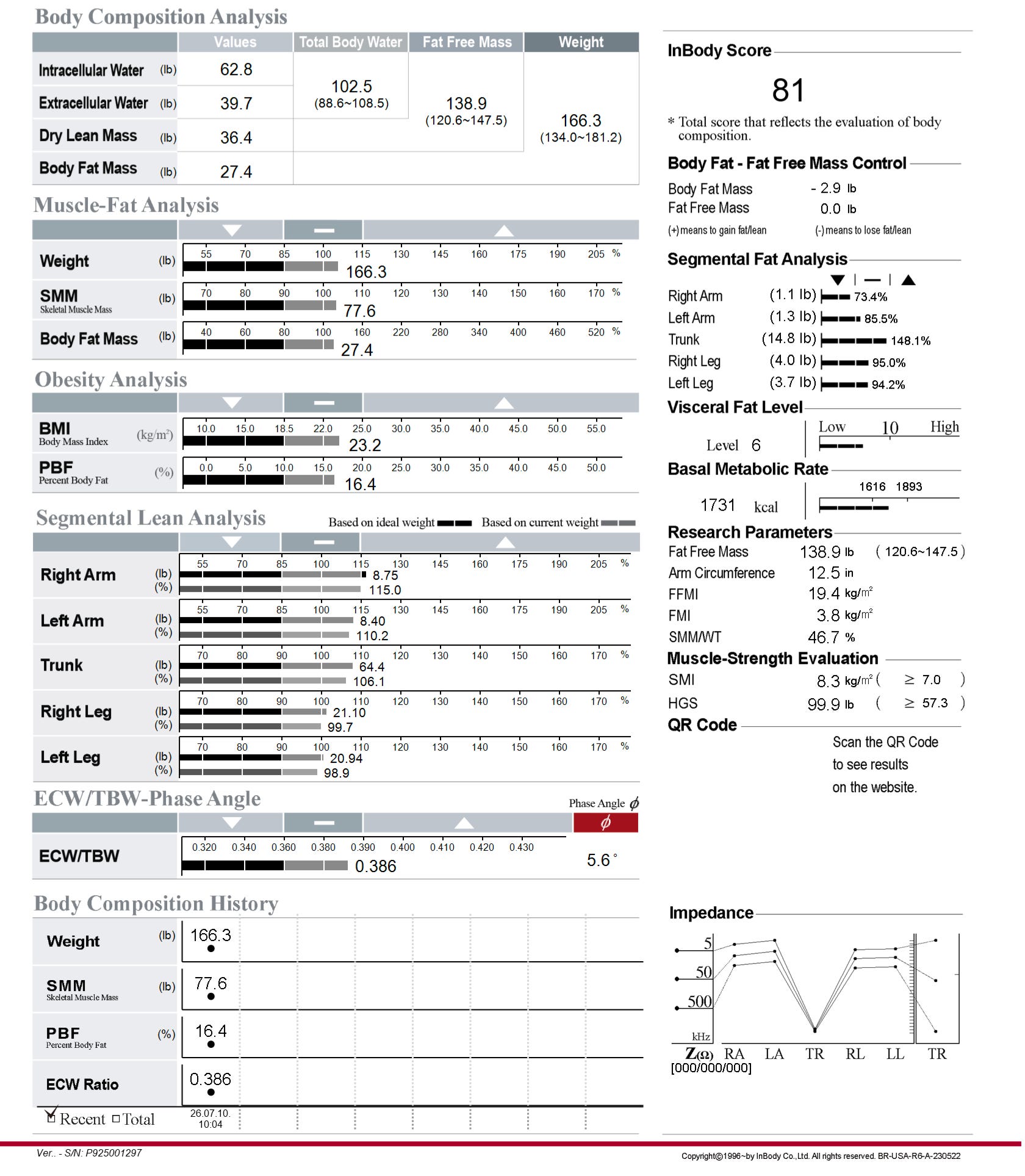
As a physician, the most important data I want to know from this are:
SMI - which is the same as ALMI, or total muscle mass relative to height
PBF - percent body fat
Grip strength
You get a few other interesting calculations and numbers:
Basal metabolic rate - how many calories you burn at baseline
Estimation of your visceral fat
ECW/TBW ratio - guesstimate of excess fluid or inflammation
Weight and BMI Are Crude Metrics
Modern food technology unfortunately has created normal BMIs but very unhealthy fat distribution. That’s why it’s not a good metric for most of us.
High protein intake and exercise has made weight also a less useful metric. That’s why in my practice we rarely talk about weight but care more about someone’s body composition.
I’m not sponsored by InBody and there are lots of great alternatives but if you’re looking to get yours done, check out their map here.
Grip Strength
There’s a lot of hype about grip strength and leg muscles. I consider them to be more correlative and less causative.
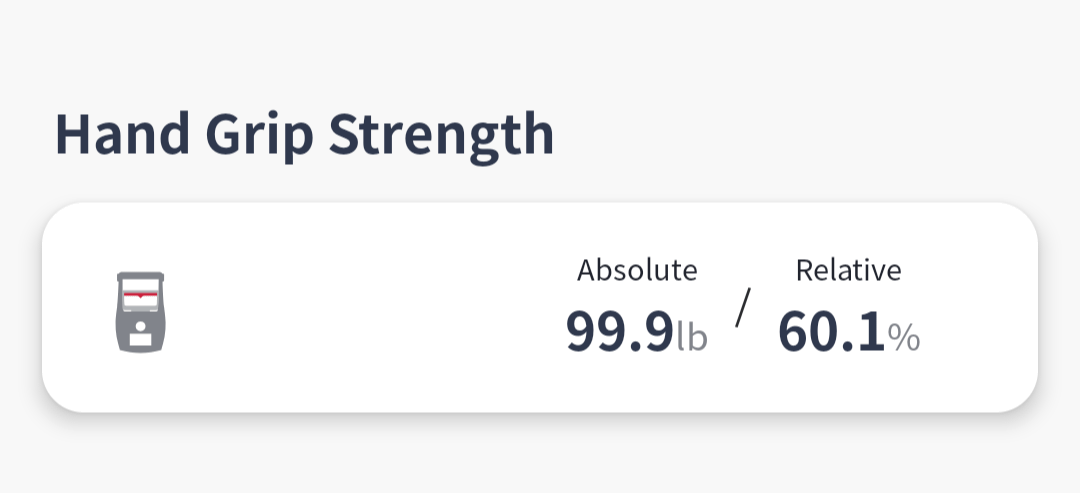
My grip strength is quite high at 99.9 lbs because I’m a rock climber. I’m sure if you measured my VO2Max it wouldn’t be that impressive. But that’s the problem with measurements like this - they tell us what someone has maximized in their life, not optimized.
Segmental Analysis
I usually don’t care much about the breakdown of muscle mass in relation to the body part. But in certain age groups and medical conditions it’s really important.
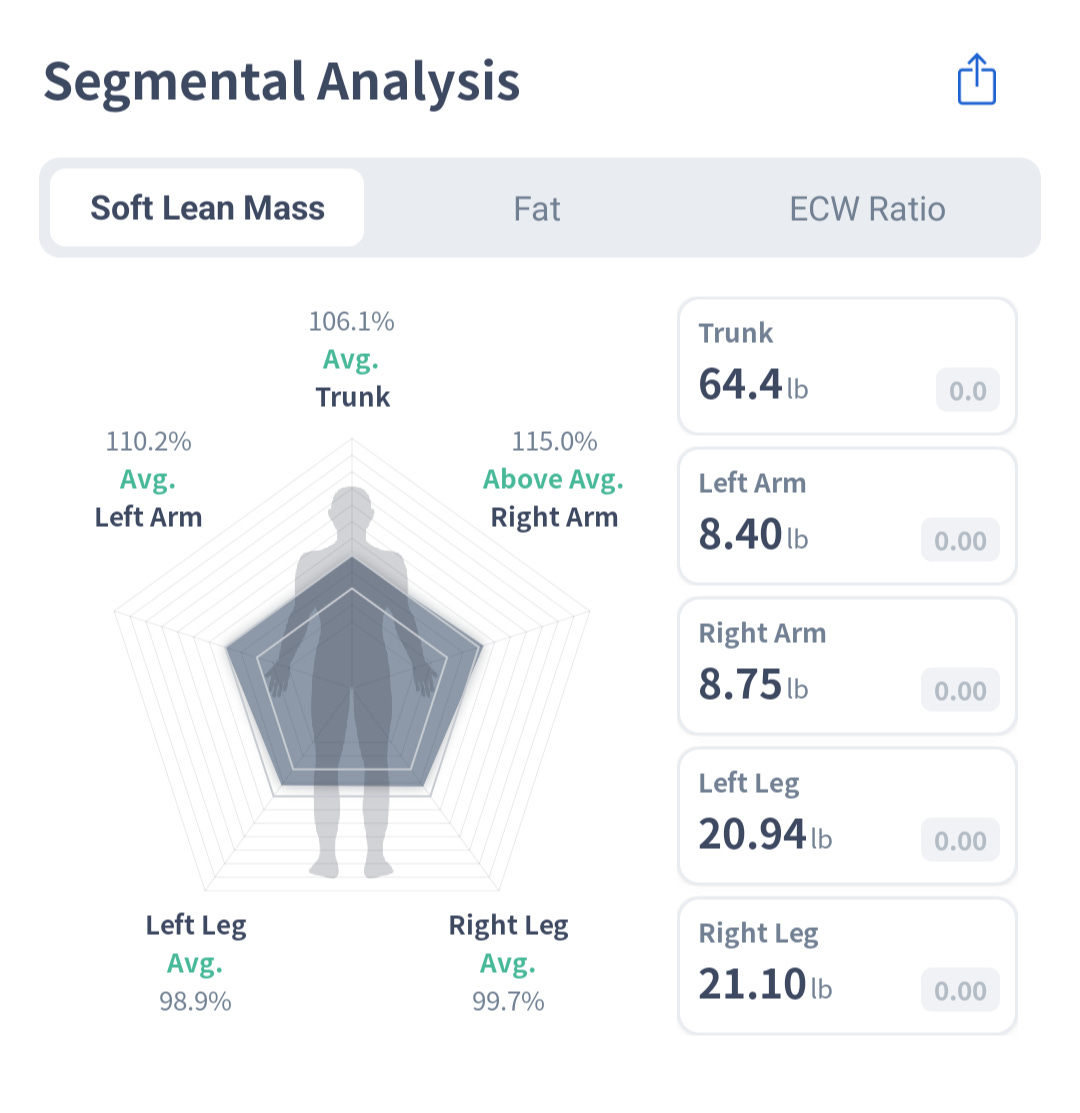
I like to see a good correlation between right and left. Discrepancies often indicate that someone may benefit from a better exercise form to avoid loading a joint more on one side.
Muscle-Fat Analysis
You’ve heard of skinny fat or sarcopenic or metabolically healthy obese. I’m not a fan of these terms because they are rarely backed by data.
I’ve had many patients referred to my practice who were convinced they are in tip-top shape but their scans revealed quite a bit of fatty liver disease, as I’ve discussed in this article below.

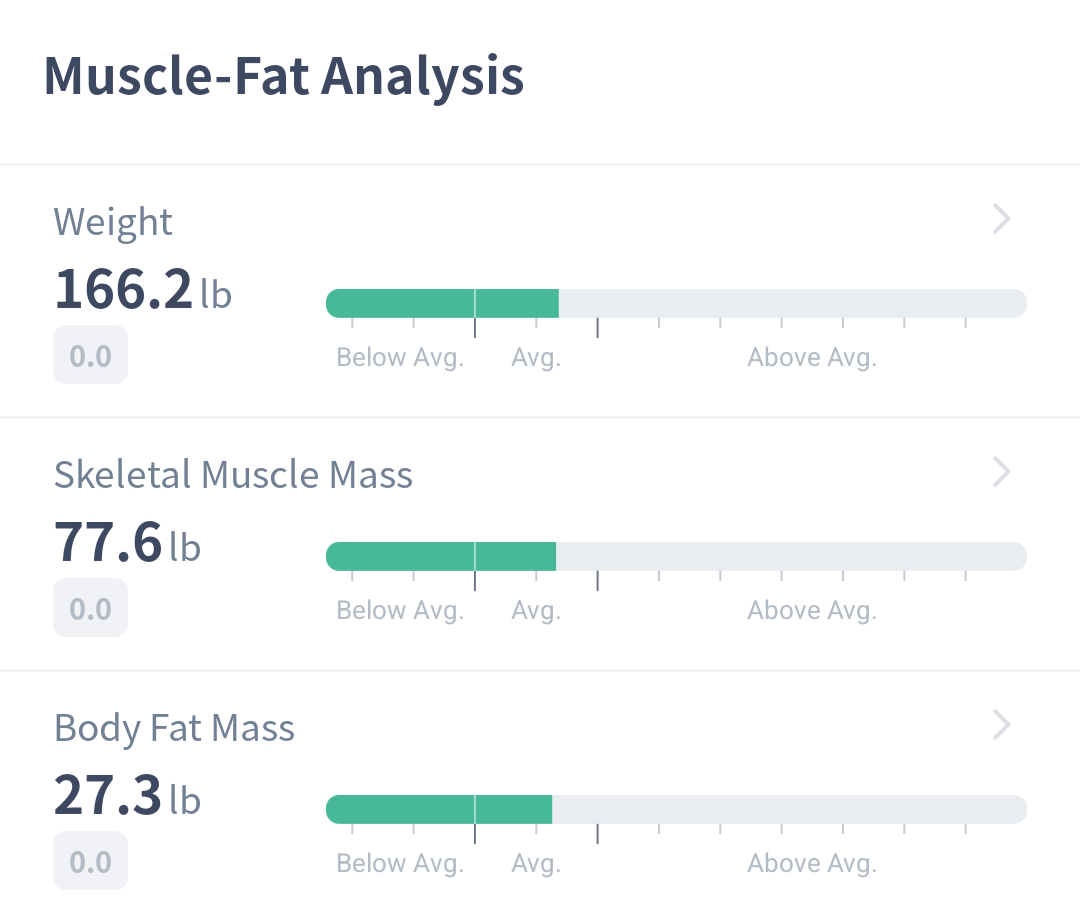
Given your frame, it’s good to know how much skeletal muscle mass vs body fat you have. Of course, what also matters is where this fat is located.
Visceral fat hides around the organs. Subcutaneous fat is less problematic and sits under the skin. This is a very simplistic way of describing fat but it’s fine for this discussion.
A DEXA scan with the right software or an MRI can give much more accurate values. Then again, you can use biomarkers like Tg/HDL ratio, waist-to-height ratio, or fasting insulin to determine if visceral fat is present.
I work with a small number of clients to get to the root cause behind their symptoms and build a plan that works.
Disclaimer:
Dr. Mohammad Ashori is a U.S.-trained family medicine physician. The content shared here is for education and general guidance. It is not personal medical advice, diagnosis, or treatment, and it does not create a doctor-patient relationship. Humans are complicated and your personal details matter. Your healthcare team is your best resource before making medical decisions, changing medications, or managing symptoms. This information is to help you add more depth to those conversations.
Follow me on:
📸 Instagram
▶️ YouTube
📘 Facebook
👽Reddit