


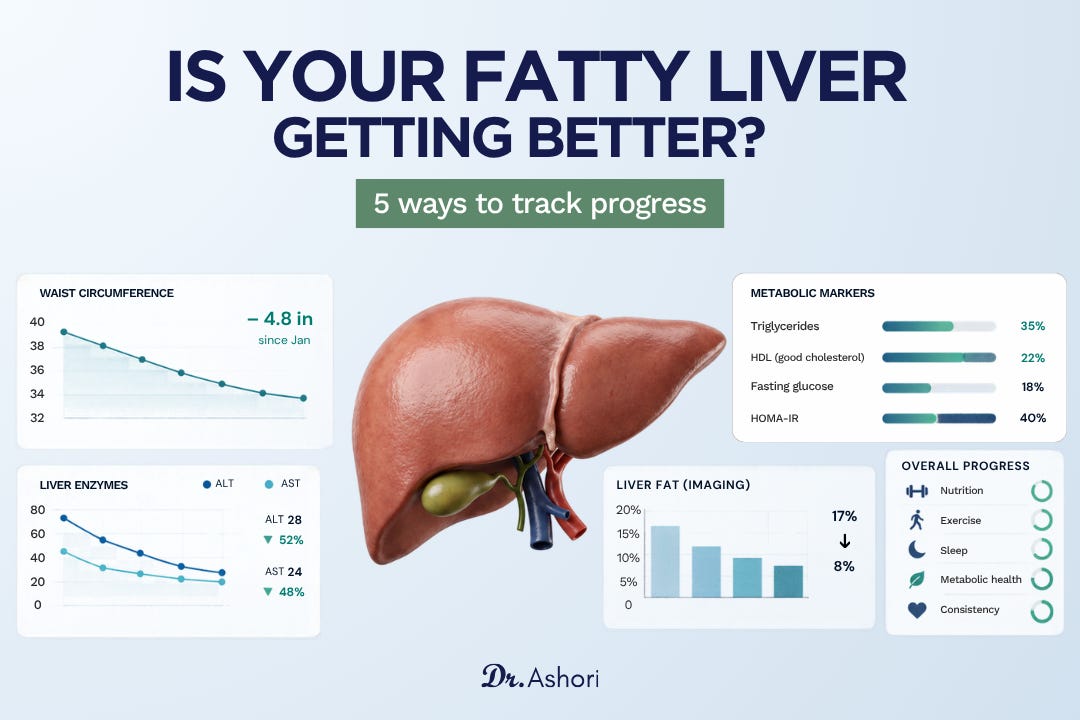
You were told you had fatty liver disease and you implemented some solid changes. But how do you know things are improving?
Welcome to the Physician-Led Health Coaching weekly newsletter. I’m Dr. Ashori, a board-certified physician & health coach. I help people fix brain fog, fatigue, and stubborn weight before they turn into real disease.
1. Weight & Waist Circumference
This is the cheapest and easiest one you can track at home.
And if you don’t like looking at the scale, the waist circumference will suffice. If you do weigh yourself, the number is less important than the trend.
No matter what weight you’re at, if you’re dealing with steatohepatitis then a 5% weight loss will meaningfully reduce your liver fat. Get to 7-10% and you’ll drop the accompanying inflammation.
Some data says that a drop of more than 10% will even improve fatty liver with fibrosis (a serious complication of fatty liver disease). The key of course, is to not lose your muscle mass. We’ll get to that later.
With your waist circumference, track your progress. Losing just 2 inches (5 cm) would translate into significant visceral fat loss. And while a DEXA scan is nice to have, it’s not an absolute must.
2. The Metabolic Drivers
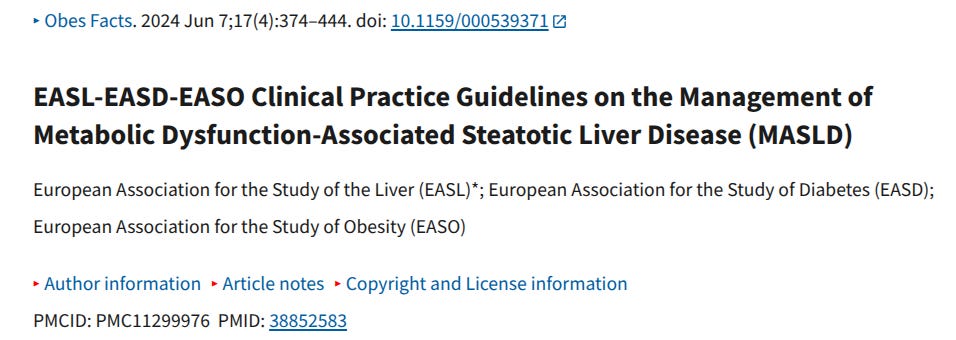
Fatty liver disease, aka Metabolic Dysfunction-Associated Steatotic Liver Disease (MASLD), happens as a result of a bigger metabolic dysfunction. Fix the underlying metabolic problem and the liver is likely to improve.
When we talk about your metabolic health, we are referring to how your body is handling energy and fuel storage. And the way we can measure these is through your fasting blood sugar, triglycerides, HDL, blood pressure, and even fasting insulin.
I don’t just want someone’s ALT to come down. I want to know whether we’re reversing the process that caused fat to accumulate in the liver in the first place.
That’s why in my practice, at drashori.com, we use the TREND Method. T is for Testing, where we use appropriate biomarkers to assess things like metabolic health. REND stands for Relationships, Exercise, Nutrition, Downtime, which are the factors that we can manipulate to improve those test markers.
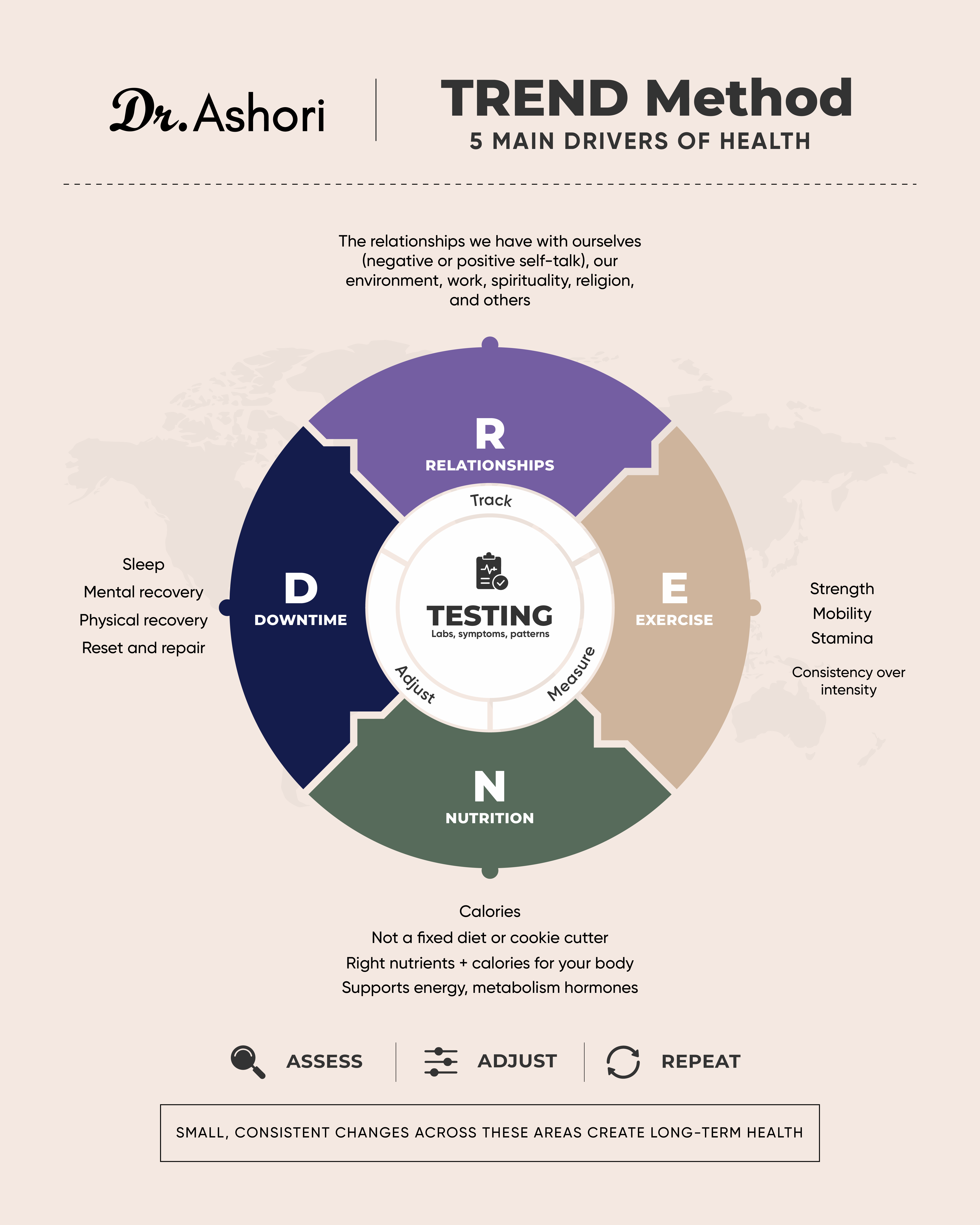
If your weight is going down, you’re exercising more, your resting heart rate is improving, and your fasting blood sugar or insulin are coming down, those can be encouraging signs that your metabolic health is moving in the right direction. That’s how connected these are.
Not sure which health markers are worth paying attention to?
My free Fatty Liver Fix Guide walks through the health markers, nutrition, weight, and exercise considerations that can be relevant when fatty liver is a concern.
I wrote more about what I would initially pay attention to in:

3. AST and ALT - Liver Enzymes
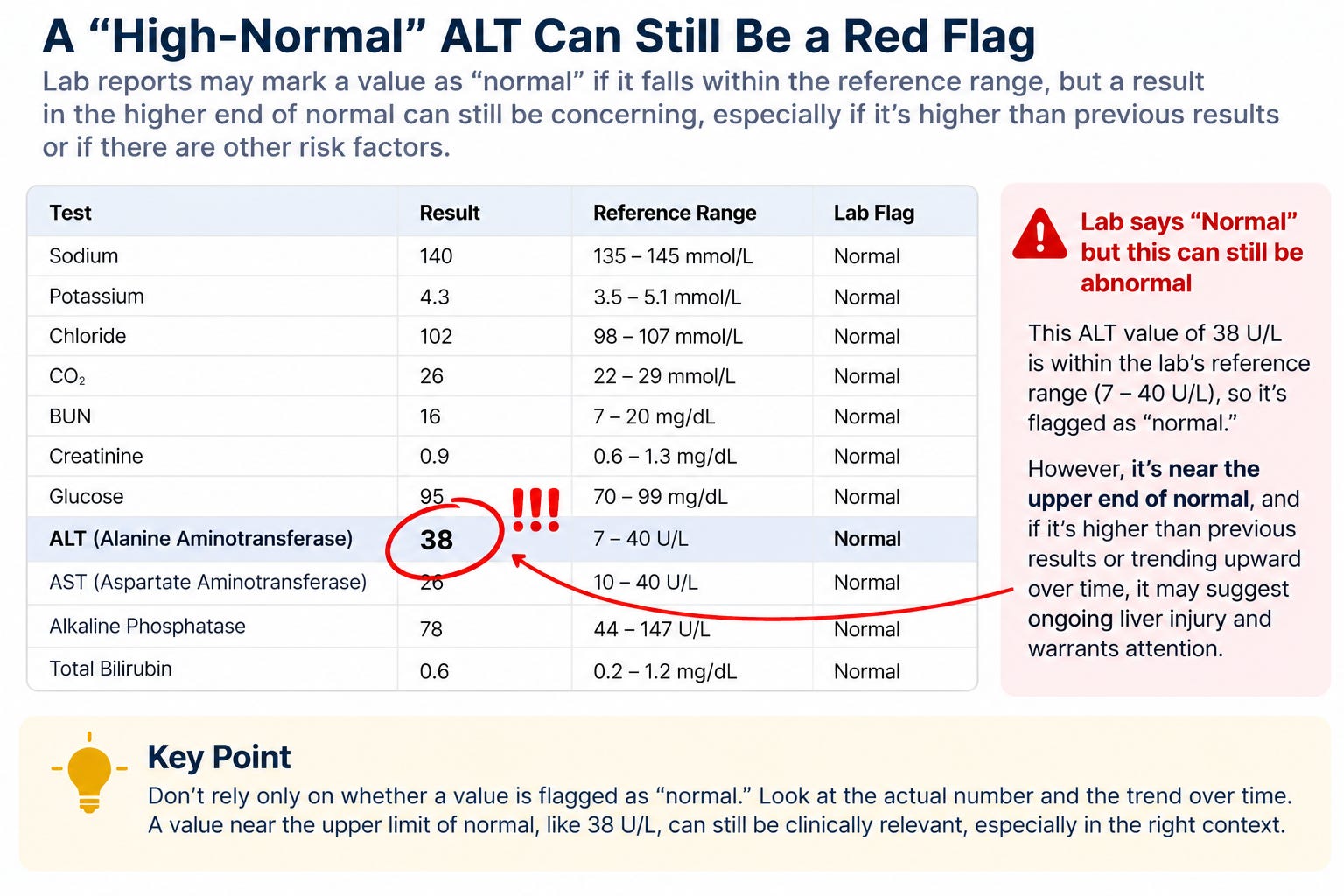
To assess if someone has any excess fat on the liver I look at the actual liver enzyme values, AST and ALT. Often labs won’t flag liver enzymes as abnormal until you are well into liver damage territory.
Many don’t know this but the flagging levels on labs are established for reporting purposes, not always for what’s normal and abnormal.
Liver enzyme trends are also important. In a healthy adult there’s no reason for the liver enzymes to be rising unless that person is accumulating more damage over time.
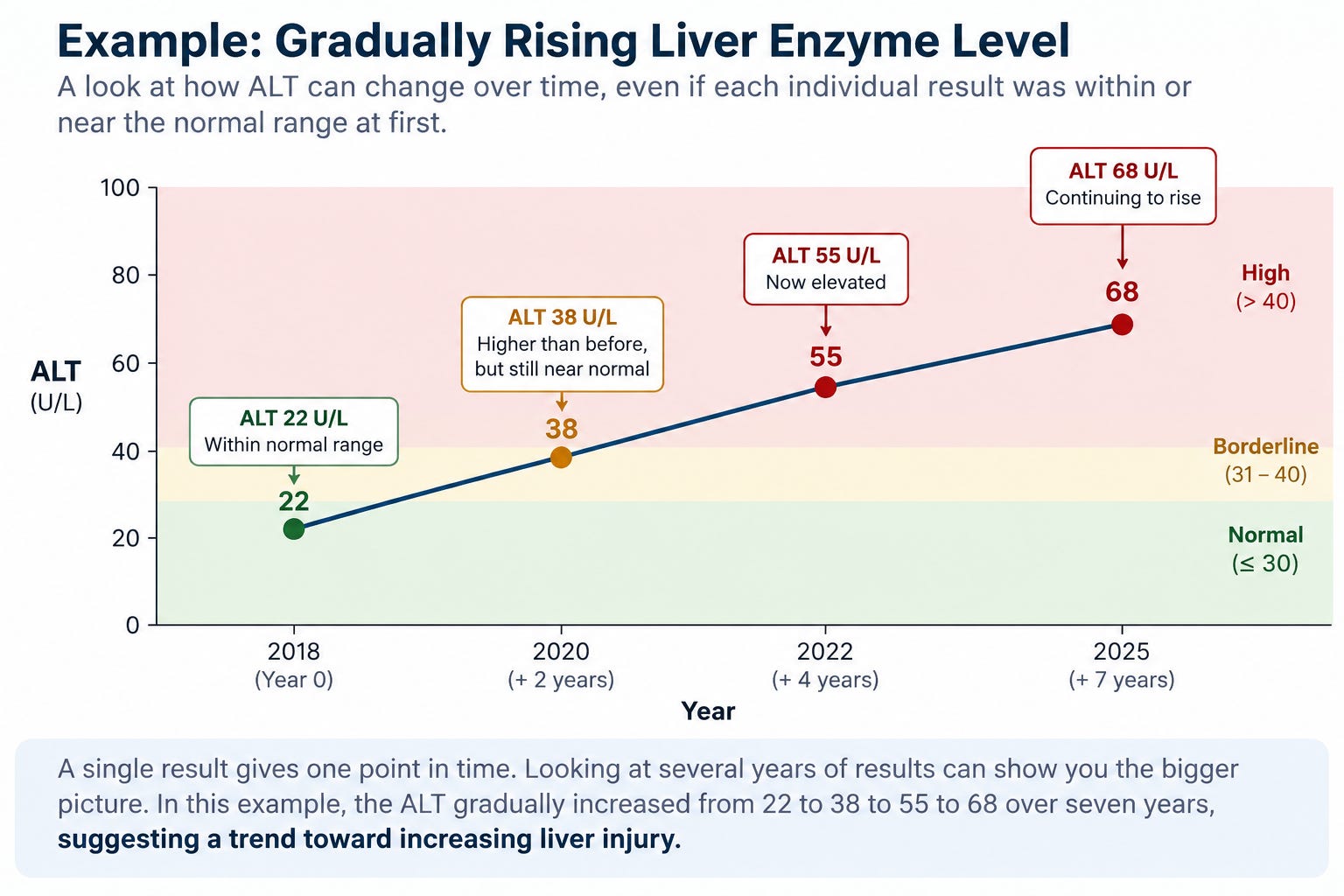
The classic scenario I see is an ALT of 22, followed by a rise to 38 (completely normal by lab standards), and eventually 68 a few years later. This last value is when the lab may finally flag the result as abnormal.
So, what did your doctor say about your most recent liver enzymes levels?
Could you have fatty liver disease with perfectly normal liver enzymes? Unfortunately, yes. That’s why we don’t just rely on one set of biomarkers when someone is at risk.
4. Liver Fat Imaging
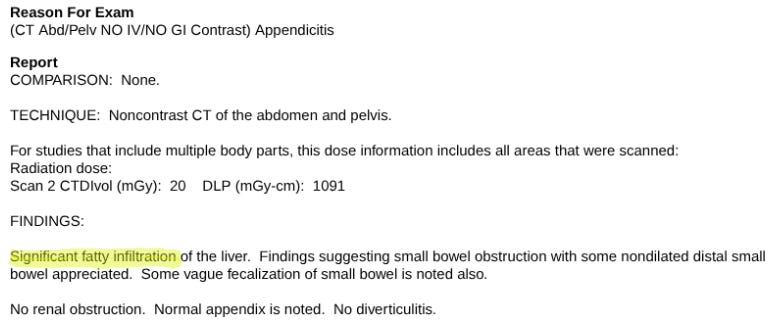
Besides the blood test, many first find out that they have fatty liver disease because of a CT or Ultrasound. They do an ultrasound for the ovaries or kidneys and the radiologist comments on abnormal changes in the liver, maybe even fatty liver disease.
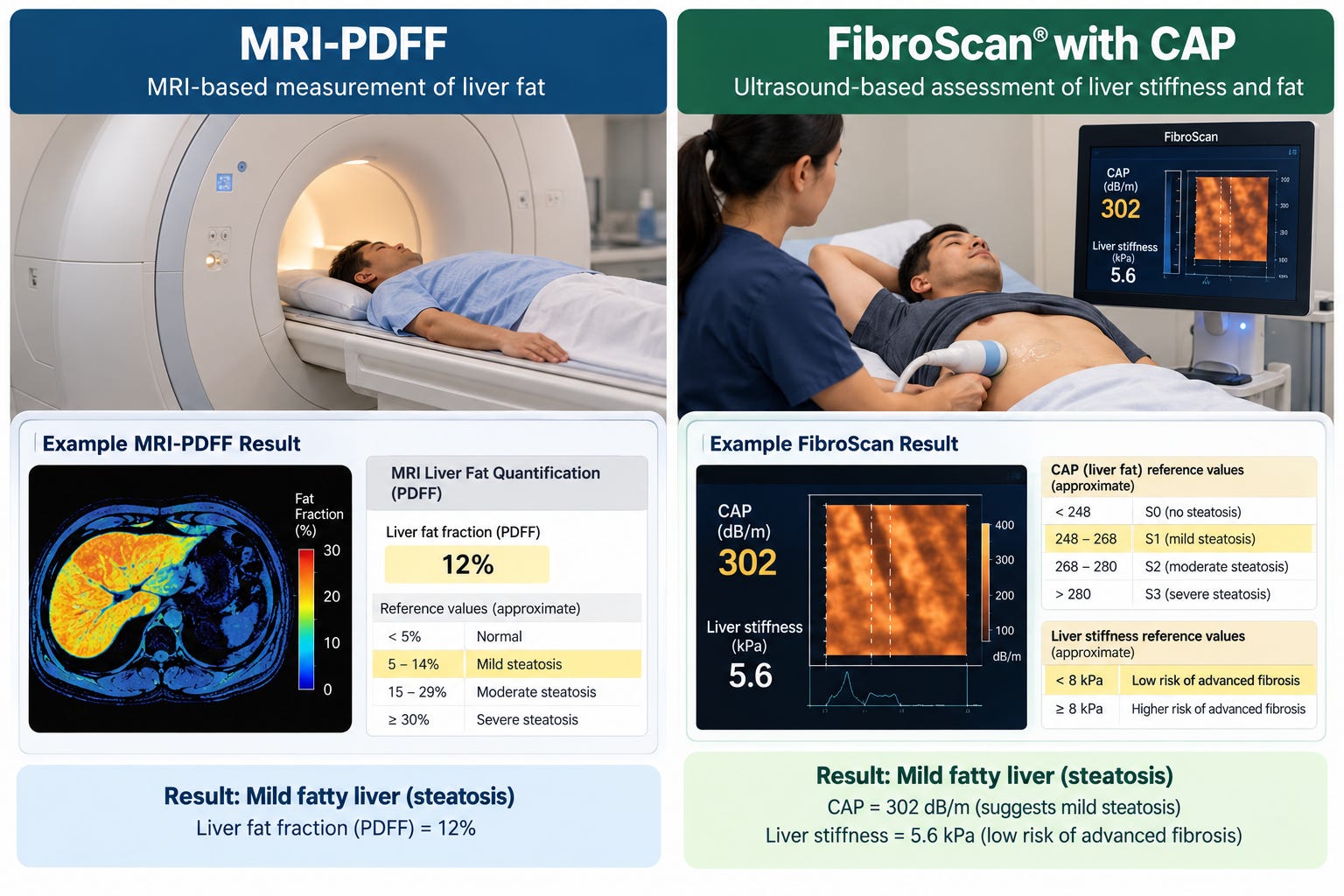
But an ultrasound isn’t always enough and it can miss fatty deposits in the liver. An MRI-PDFF (magnetic resonance imaging–proton density fat fraction) is a specialized MRI measurement that estimates the percentage of fat in the liver. It measures fat, not liver scarring; fibrosis requires a different imaging study.
We also have FibroScan with CAP that measures liver stiffness, evaluating for fibrosis (scar tissue). The “CAP” is a specific ultrasound that measures steatosis (fat).
Before you consider these tests, ask yourself how the result would impact what you do. Getting a test for the sake of a test often results in unnecessary spending and health anxiety.
Want the bigger fatty liver framework?
I put together a free Fatty Liver Fix Guide covering the health markers, nutrition, weight, exercise, and other factors worth understanding.
5. Fibrosis Risk
Among those with fatty liver disease, 33% progressed to worsening liver fibrosis. About 8% of Americans with MASLD already had advanced fibrosis on the initial scan.
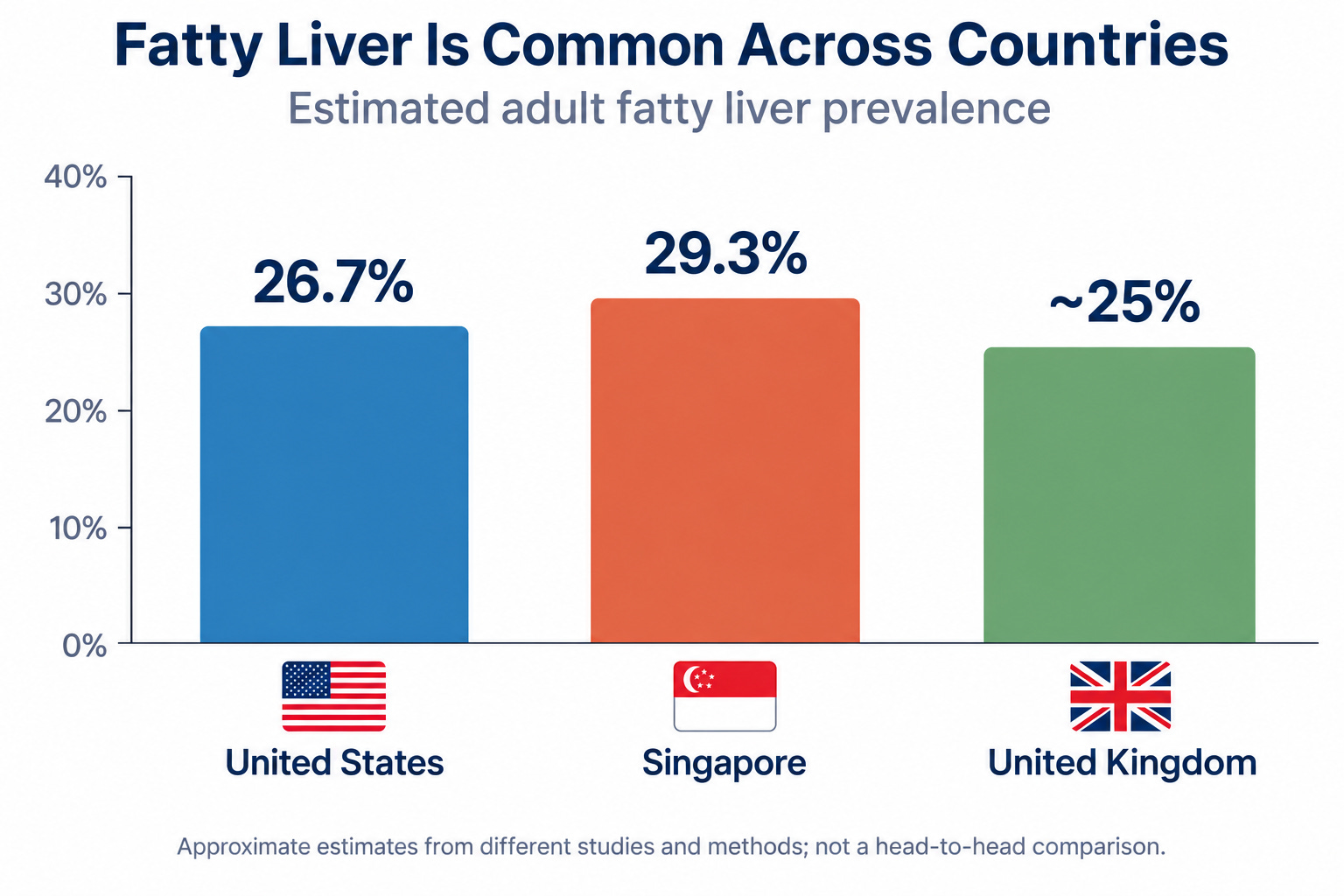
Liver fat matters because the whole goal is to avoid liver fibrosis. In fact, I’m okay keeping someone’s fatty liver at bay even if I can’t get rid of it as long as I can prevent progression to irreversible liver fibrosis.
What’s your fibrosis risk? You can calculate it using FIB-4 formula. Current liver guidelines commonly use it as the first-line noninvasive fibrosis assessment in adults with MASLD, taking into account your age, AST, ALT, and platelet count.
The main reason for all of this extra testing is to answer one question: Has the fatty liver progressed to a stage that poses greater long-term risk?
How to Use All This Information
It’s never a good idea to take a protocol and blindly paste it into your life.
First: Establish your baseline liver status.
Second: Make a meaningful change in your lifestyle and habits.
Third: Repeat the measurements that answer your most important health question.
An example might be that your weight/waist is trending up over time. So the best adjustment is first to address nutrition/exercise behavior. And if you’re struggling then you want to know your liver enzyme numbers and metabolic markers. Now, calculate your fibrosis risk and restart your lifestyle efforts. Consider imaging if you’re still not making progress.
What if the numbers don’t improve?
If your fatty liver markers are staying the same or getting worse, then you want to be a scientist when it comes to your nutrition and exercise. Not just guessing calories or steps walked, but really measuring it.
How much exact weight did you lose? Was it muscle or fat?
How much did your alcohol intake change?
What’s your exact level of insulin resistance or metabolic status?
Could something else other than fatty liver explain the liver issues?
What else can you try if what you’ve tried hasn’t worked?
You don’t need every available liver test. You need the right initial basic testing, a real intervention, and a plan for reassessment.
One lab marker shouldn’t declare success or failure because this is a long-term game and it takes years before real damage sets in.
Look at the trend across metabolic health, liver enzymes, liver fat, and fibrosis risk. If those are moving in the right direction, you’re building much stronger evidence that the liver is improving.
Not Sure What You Should Follow?
If you’ve been told you have fatty liver and aren’t sure what deserves your attention first, I put together a free Fatty Liver Fix Guide that goes deeper into the health markers, nutrition, weight, and exercise considerations I think are worth understanding. The goal is to help you better understand what may be relevant so you can have a more informed conversation with your healthcare team.
Related Reading:
How to Reverse Fatty Liver Disease Without Medication →
A deeper look at the nutrition, exercise, and lifestyle changes that can support liver and metabolic health.
“So, What Did Your Doctor Say?” →
A patient example of why I pay attention to changes over time rather than looking at individual results in isolation.
Disclaimer:
Dr. Mohammad Ashori is a U.S.-trained family medicine physician. The content shared here is for education and general guidance. It is not personal medical advice, diagnosis, or treatment, and it does not create a doctor-patient relationship. Humans are complicated and your personal details matter. Your healthcare team is your best resource before making medical decisions, changing medications, or managing symptoms. This information is to help you add more depth to those conversations.
Follow me on:
📸 Instagram
▶️ YouTube
📘 Facebook
👽Reddit