


You’re getting through your workday, you’re still productive, but focusing takes a lot more effort. Maybe you lose your train of thought in meetings. You reread the same paragraph and names or words don’t come to you as quickly.
By early afternoon, doing focused work feels considerably harder than it did in the morning.
People often describe all of this as brain fog. A condition that we don’t diagnose in Western Medicine.
To understand brain fog I need to know a few things.
1. What does “brain fog” mean to you?
It’s different from person to person. One is worried that they are losing their mind. Dementia. Another is frustrated that they can’t concentrate.
Memory and recall are terrible to deal with in a busy workplace, while mental fatigue and word finding just leaves you exhausted. Maybe even dreading work.
Your definition of brain fog is what matters. There’s no universal definition.
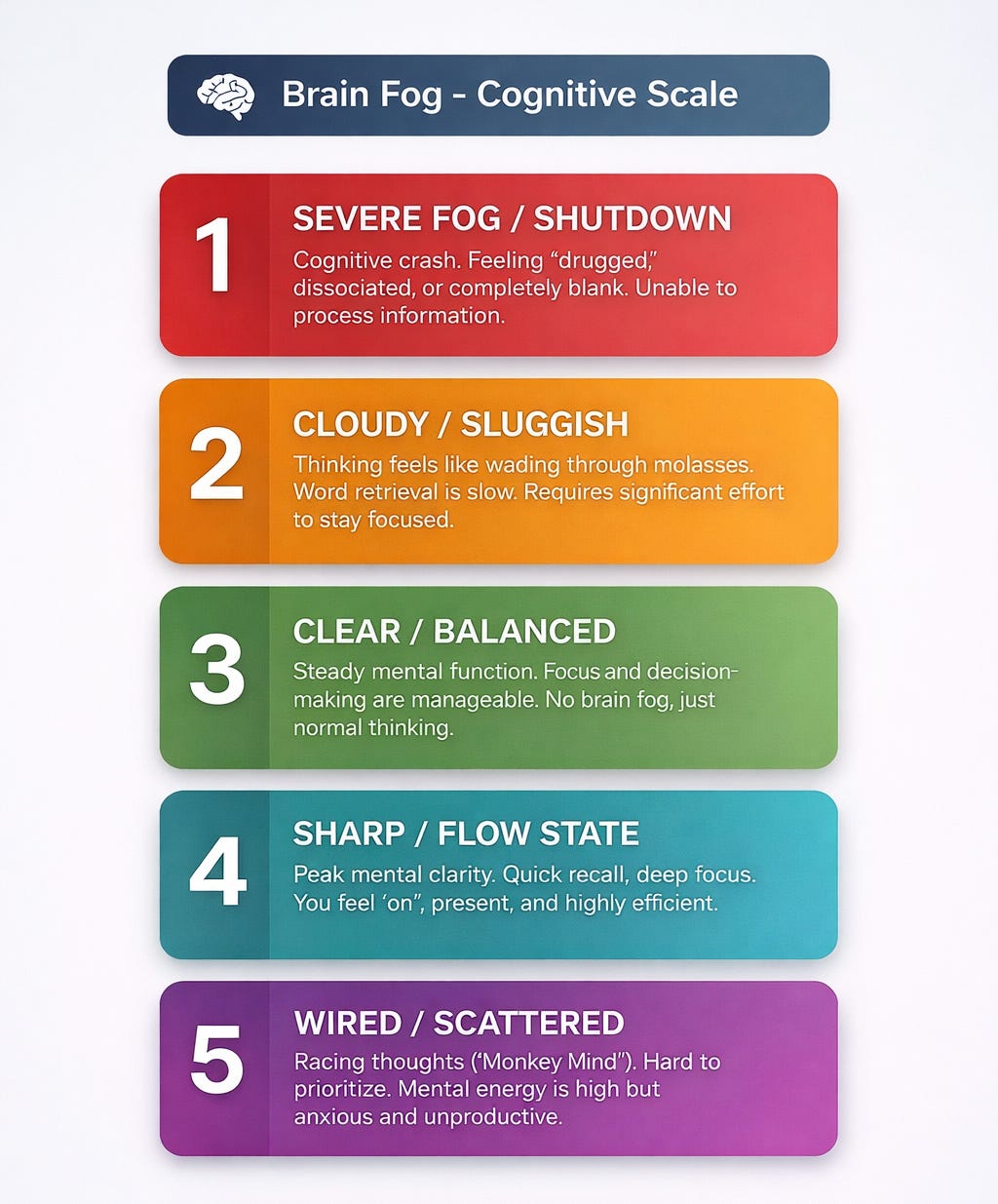
2. When does it happen?
For most adults it happens later in the day but some deal with it constantly. They wake up with it and go to bed with it.
But maybe you’ve noticed that it’s worse after meals. Worse in the afternoon? Maybe better on your vacation but bad when you’re under a lot of pressure.
The pattern alone doesn’t diagnose the problem. But it tells us what lifestyle factors are affecting your mental performance.
3. What does sleep look like?
I’ve been practicing medicine for 2 decades and have become an expert in brain fog over the last 5 years. Sleep keeps coming up as a major contributor, though not always causal factor.
For many busy professional, eventually, “tired” starts feeling normal. Getting back to the basics of sleep is a helpful way to rule out sleep-related brain function.
Dealing with brain fog?
I created a free guide to help you take a closer look at the patterns that may be affecting your focus, energy, and mental clarity.
4. What are you asking your brain to do all day?
I’m 48 and running a busy medical practice and a big team to help with my online clinic workflow. I often have back-to-back meetings, notifications, emails, deadlines, and I still want time to rest, rock climb, cook.
Whenever your downtime decreases, you’re left with no room for recovery. Both physical and mental recovery matter for us adults. Less so when you’re a teenager, of course.
I don’t think we can discuss focus without considering the environment we’re expecting the brain to perform in.
5. What else is changing?
It’s rare that brain fog is the only problem. How is your energy, weight, exercise, nutrition? Are you taking new supplements, meds? How’s your mood and emotional state?
I need to know relevant health markers to assess someone’s overall health. Often a medical history is very telling but it’s helpful to know contributing factors.
Your brain isn’t operating separately from the rest of your body. That’s why I prefer looking for patterns before randomly changing 5 things.
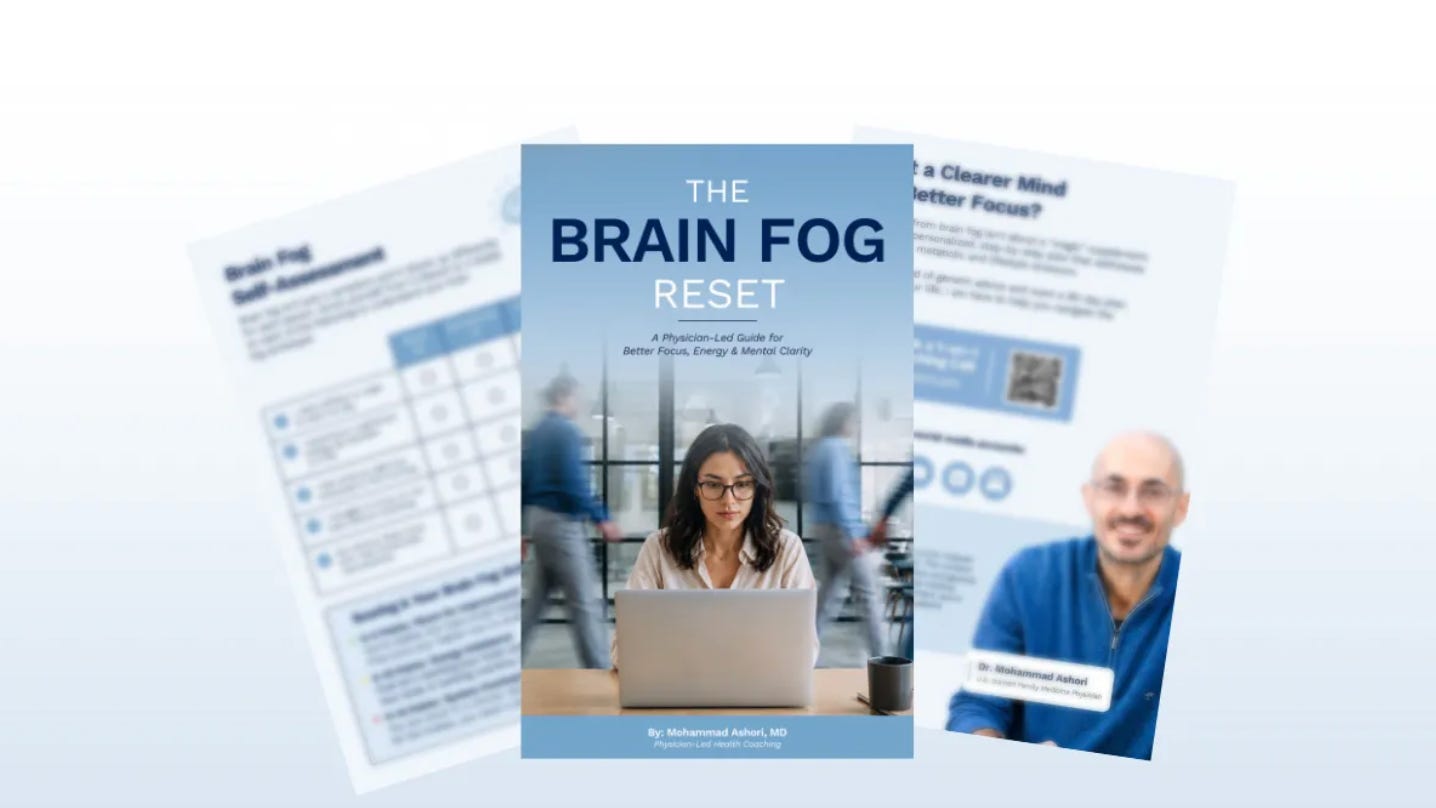
If you’ve been dealing with brain fog and aren’t sure what deserves your attention first, I created a free Brain Fog Reset Guide to help.
It will help you take a closer look at the patterns around your focus, energy, sleep, and daily habits so you have a better idea of where to start.
Inside the guide:
Common contributors to brain fog worth paying attention to
A simple self-assessment to help you spot patterns
Practical changes you can start trying
A simple way to decide what to focus on first
Still not sure what may be contributing to your brain fog?
If brain fog is starting to affect your work, responsibilities, or how you feel during the day, you don’t have to keep guessing at what to change first.
In a 1-hour Health Assessment, I’ll look at the bigger picture with you, your brain fog, energy, sleep, daily habits, health history, and priorities and help you figure out where it makes sense to start.
Disclaimer:
Dr. Mohammad Ashori is a U.S.-trained family medicine physician. The content shared here is for education and general guidance. It is not personal medical advice, diagnosis, or treatment, and it does not create a doctor-patient relationship. Humans are complicated and your personal details matter. Your healthcare team is your best resource before making medical decisions, changing medications, or managing symptoms. This information is to help you add more depth to those conversations.
Follow me on:
📸 Instagram
▶️ YouTube
📘 Facebook
👽Reddit
Thank you for this article, Dr. Ashori. Brain fog means something different to everyone, which is probably why generic checklists rarely help. The same symptom showing up at different times of day, or only after meals, or only under pressure, points to very different causes