


I have a confession.
I used to be the kind of person who could polish off an entire tray of stuffing, loaded with cranberry jam, naturally. That was a long time ago. So when Chef Martin Oswald and I got together for a live cooking session, I decided to prepare my old standby stuffing for comparison.
I was filming from Anchorage, Alaska and Martin was in his kitchen in Austria, showing us how to make a healthier and tastier stuffing version from scratch.
His recipe included roasted butternut squash, walnuts, whole-grain bread, flaxseed, and plenty of herbs. We were looking at the same holiday dish from two different perspectives. His as a chef and mine as a physician.
Welcome to the Physician-Led Health Coaching weekly newsletter. I’m Dr. Ashori MD, a board-certified physician & health coach. I help people fix brain fog, fatigue, and stubborn weight before they turn into real disease.
Healthy Food Should Taste Great
Food has to taste good. We aren’t living in caves anymore. Most of us have developed paletes and we celebrate with food.
Healthy ≠ Tasteless
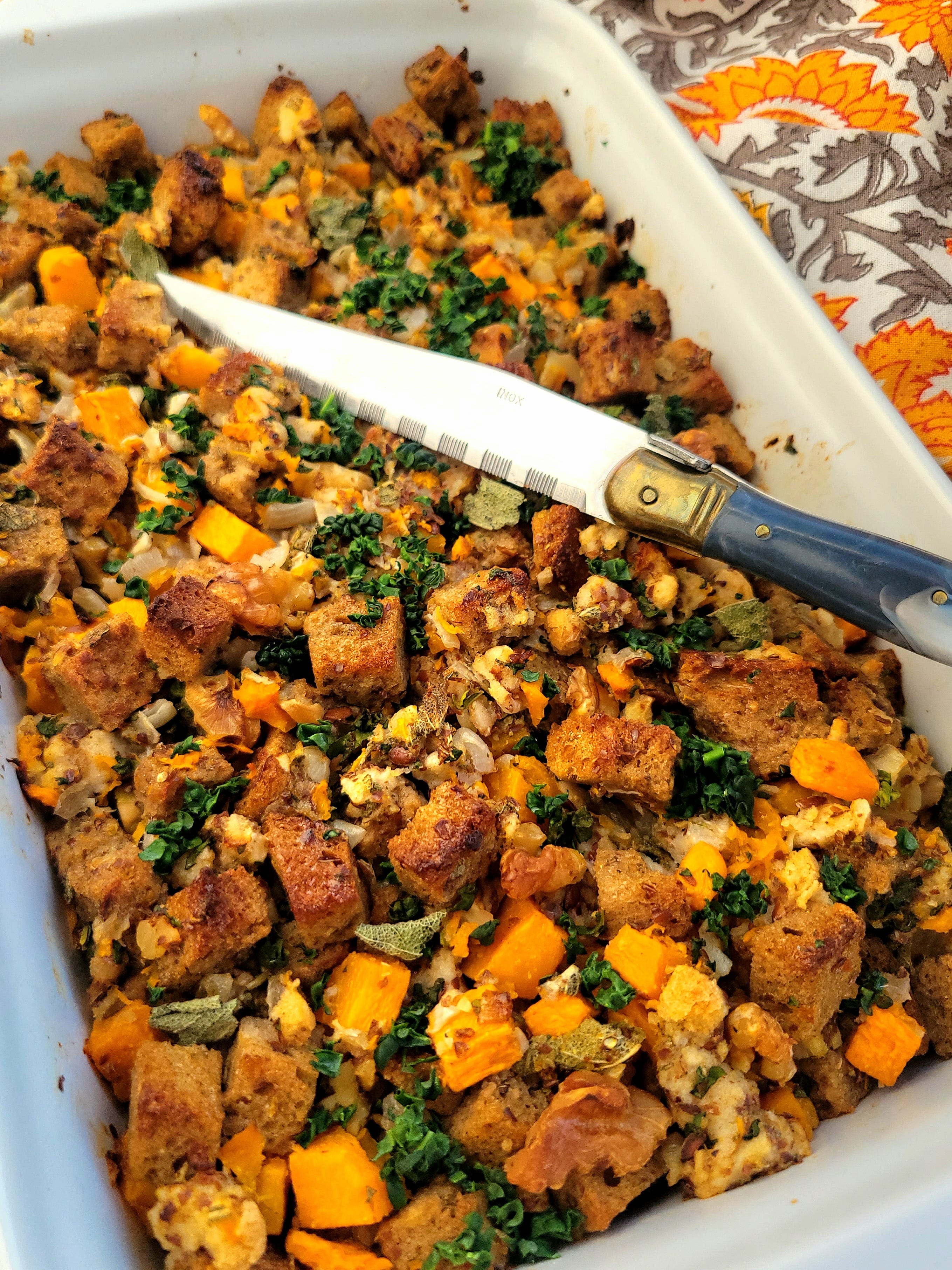
One of the things I appreciate about Chef Martin is that he understands that food has to taste great. He roasted butternut squash with onions and garlic, then mashed some of the vegetables to create a creamy base without relying on butter.
He also used ground flaxseed mixed with water as a binder, added optional walnuts for richness and texture, and chose whole-grain bread for more fiber.
Instead of just swapping ingredients, he was preserving what makes stuffing satisfying: the soft, custardy center, the golden, crispy top, and those familiar flavors of sage, thyme, onions, and garlic.
From a nutritional standpoint, the changes are useful too. Butternut squash provides fiber, potassium, and beta-carotene. Walnuts contain unsaturated fats. Ground flaxseed contributes fiber and alpha-linolenic acid (ALA), a plant-based omega-3 fatty acid.
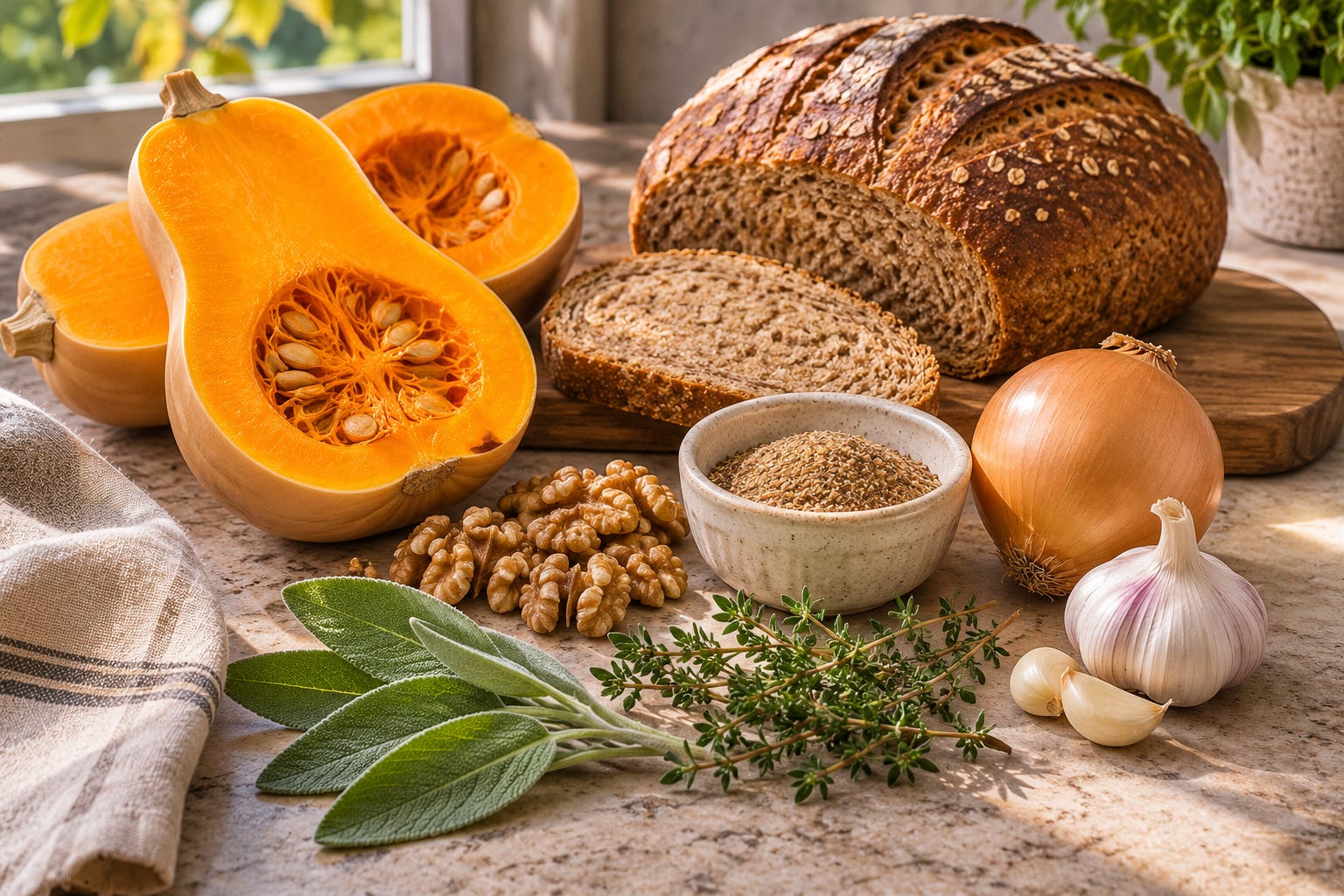
And whole-grain bread generally contains more fiber than refined white bread. So instead of making a whole new dish, he made the familiar healthier.
Small Changes Matter More Than Perfection
At one point, we were discussing whether stuffing should contain whole-grain bread, white bread, or more vegetables.
And I made a point that applies to healthy eating in general. Sometimes we get so focused on making every ingredient perfectly healthy that we forget the bigger picture.
Maybe you prefer the taste of a particular bread. Maybe your family has a recipe they’ve enjoyed for generations. That’s okay.
You can still add vegetables, include more fiber, use less butter, or replace some saturated fat with unsaturated fat. You don’t have to change everything at once.
What matters is finding improvements you can maintain. I also appreciated Martin’s practical cooking tips, including preparing ingredients ahead of time. That’s important because even a great nutrition plan isn’t much use if it doesn’t fit your daily routine.
If meal planning is something you struggle with, I’ve shared some AI prompts to help build a nutrition plan around your preferences and schedule:
Use These AI Prompts to Build Your Perfect Nutrition Plan

Most people quit meal plans because they’re too complicated or not appetizing. What if, using AI, you can instantly get a plan that fits your life & health goals?
What About Eggs, Cholesterol, and Heart Health?
One of the more interesting moments came when Martin asked whether someone who’s otherwise healthy and in their 30s or 40s should worry about eating eggs.
It’s a good question.
Eggs contain dietary cholesterol, but dietary cholesterol and saturated fat aren’t the same thing. For most people, saturated fat has a greater effect on LDL cholesterol than dietary cholesterol does, although individual responses vary.
And whether someone should be concerned about their cholesterol depends on their LDL cholesterol (or apoB), blood pressure, blood sugar, family history, and overall cardiovascular risk. You can feel perfectly healthy and still have elevated cholesterol or blood pressure without realizing it. That’s one reason I encourage people to know their numbers.
The goal of preventive medicine is to recognize your risks early, before they develop into more serious problems. Of course, one Thanksgiving meal isn’t going to have a big impact on heart disease or diabetes. But habits you repeat over months and years can influence your long-term health.
Related Reading:
10 Ways to Lower Your Cholesterol Yourself According to the New 2025 European Guidelines

We have the official evidence-based guidelines for lowering your cholesterol without any medication. Just a few simple lifestyle changes that together add up to huge improvements.
Want to Build Healthier Habits Beyond the Kitchen?
Nutrition is one part of staying healthy as we get older.
Sleep, movement, stress management, and other daily habits matter too. And just like with healthy eating, you don’t have to overhaul everything overnight. I put together a free guide covering 6 Healthy Aging Habits, with practical steps to help you get started.
Download My Free 6 Healthy Aging Habits Guide
Want to Try Chef Martin’s Thanksgiving Stuffing?
If you missed our live session, you can watch Martin demonstrate how he prepares the roasted squash, uses flaxseed as a binder, and gets that combination of a creamy center and crispy top.
We also discuss cholesterol, fiber, ingredient substitutions, and ways to make healthier cooking more practical.

For the complete recipe and downloadable instructions, visit Martin’s article:
Thanksgiving Stuffing: Custardy Center & Golden Crunch
Thank You, Chef Martin!
It was fun connecting from Alaska to Austria and bringing together a chef’s perspective on making food delicious with a physician’s perspective on keeping people healthy. I learned a few new cooking tricks, and I’m looking forward to trying them in my own kitchen.
If you haven’t already, check out Chef Martin’s Healing Kitchen for more recipes and cooking inspiration.
Disclaimer:
Dr. Mohammad Ashori is a U.S.-trained family medicine physician. The content shared here is for education and general guidance. It is not personal medical advice, diagnosis, or treatment, and it does not create a doctor-patient relationship. Humans are complicated and your personal details matter. Your healthcare team is your best resource before making medical decisions, changing medications, or managing symptoms. This information is to help you add more depth to those conversations.
Follow me on:
📸 Instagram
▶️ YouTube
📘 Facebook
👽Reddit