


75 yo man new to my practice who’s accumulated his wealth and taken care of his health, hoping to live a great life. Except, health problems are starting to add up.
He has great health insurance and has been seeing his PCP. He asked me to review his labs because we have a few friends in common. While his doctor has done a good job taking care of him, I don’t think they have communicated well together.
Fatty Liver Disease
When your liver enzymes start creeping up, especially your ALT, as a family medicine physician I always want to know why. I usually start with a liver ultrasound and eventually get a FibroScan.
We combed through his old tests and he had an ultrasound which showed fatty liver disease but nothing was done. My question is why the doctor didn’t say anything or why the patient didn’t hear him. The other question is why the patient didn’t review his imaging results?
That’s okay, some good learning points. Let’s move on.
The liver is at the heart of metabolic health. Worried about fatty liver disease? Download my free Liver Fix Guide here:
Rising Blood Sugars - A1C
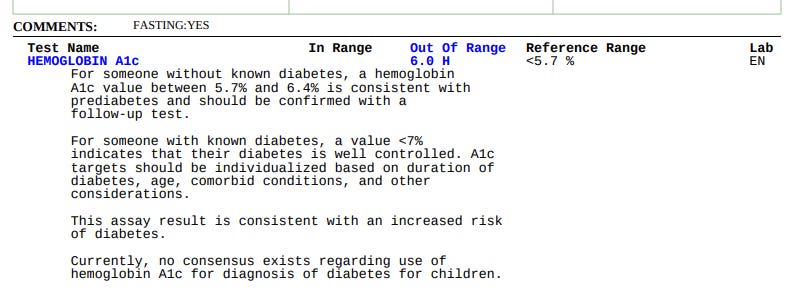
His A1C was 5.5, then 5.7, then 5.9 and eventually 6.1. His doctor said that they’ll keep watching it. But what are you watching for? If there’s a signal, what are you doing about it?
A squeaky brake could just be the pad wearing against the caliper but it could also be a sign that you need a new pad or even rotor. You don’t wait and see, you inspect. And just like your A1C, you don’t need a mechanic to inspect what’s going on.
A rising A1C is enough information to take action. What action? There are a finite options, ranking like this:
Start resistance training
Add aerobic exercise
Change your diet around
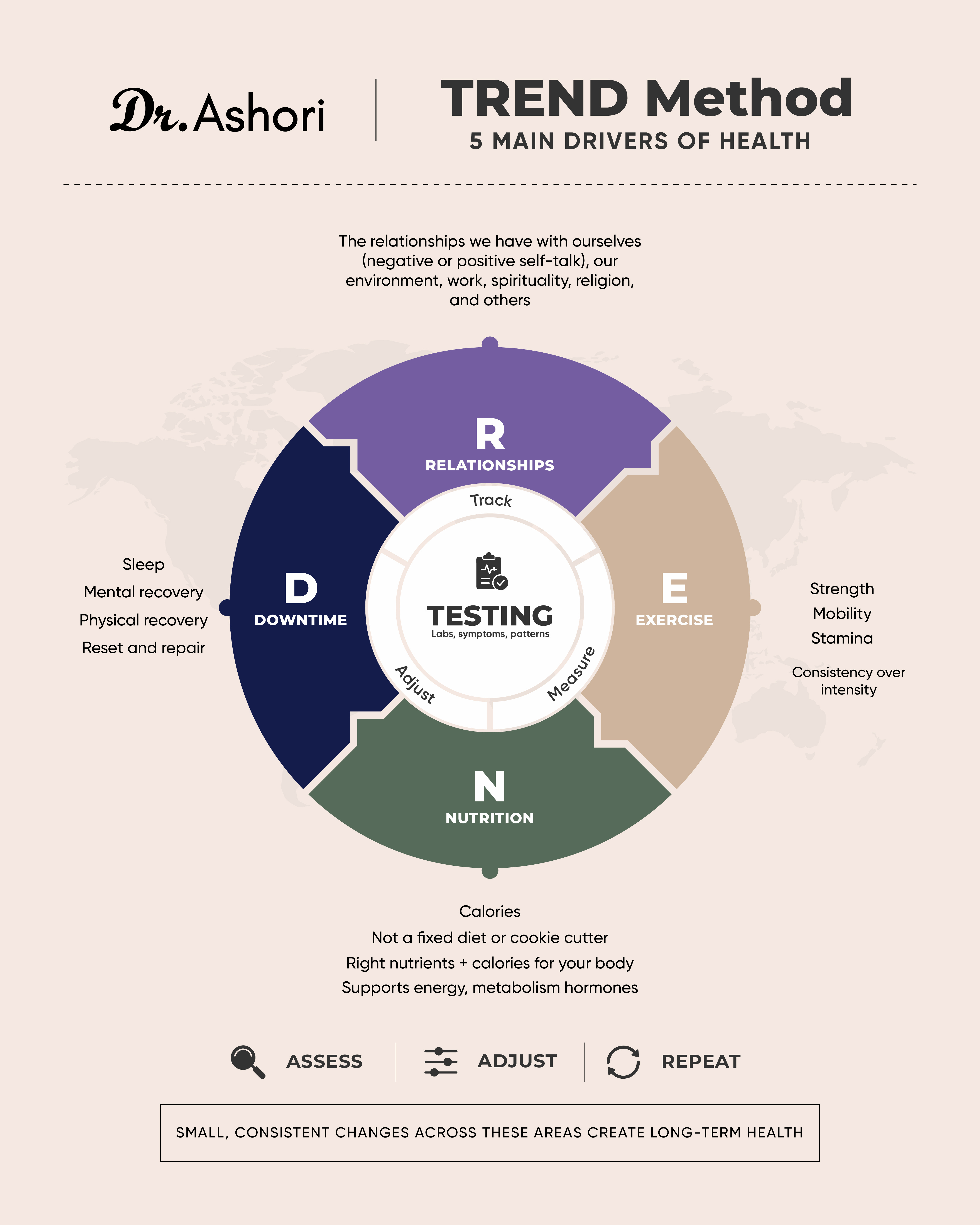
But we don’t just ignore a health signal, we take an action and retest. That’s what my TREND Method is all about. T stands for Testing. The REND are the parameters we adjust: relationships, exercise, nutrition, downtime.
Worsening Liver Enzymes
This patient was started on cholesterol lowering medications. Since then his liver enzymes have been slowly creeping up. A problem? Usually not, as long as the benefits outweigh the harm.
But he didn’t really have a lot of risk factors for heart disease to justify the cholesterol lowering medication. If he did, in my practice we would recommend a different class of medications without the liver risk.
His doctor said it’s okay, it’s not a problem. But if it’s not a problem why monitor the liver enzymes so closely? I think it is a problem and if nothing else it warrants a thorough discussion with the patient.
Obesity & Lifestyle
Again, I place equal burden on the doctor as the patient. Any great patient-doctor relationship requires both parties to be fully vested. The problem here is that this patient’s weight was never discussed.
Not being very tall, 180 lbs (82 kg) was too much. His doctor didn’t say anything but this new patient of mine was also not concerned. He assumed it was par for aging. Not so.
A healthy body composition is a strong predictor of long-term health. You don’t have to have the perfect body composition but carrying extra fat around your liver is not ideal.
After some talking, my patient admitted that the doctor mentioned a few things about a better lifestyle and even offered a nutrition consult. Who knows, maybe the doctor didn’t want to be pushy or the patient didn’t want to know more details.
Take Signals Seriously
The gist of this article is that any signal in health should have some sort of action plan. After all, you step on a scale for a reason. What are you planning on doing with the information?
We are fortunate to have lots of medication options, so that if one is causing an issue, the relief batter is ready to go.
You as the patient have to be the most proactive. Trust your doctor and appreciate them but vet everything they say. I certainly hope that nobody in my practice is following my advice blindly.
Two adults who are engaged and open, vulnerable, and inquisitive will have the best chance at creating a meaningful patient-doctor relationship.
Frustrated by one-size-fits-all advice? I take on a limited number of 1-on-1 coaching clients to dive deep into your unique health history, identify your physiological triggers, and design a sustainable plan to help you feel your best.
Disclaimer:
Dr. Mohammad Ashori is a U.S.-trained family medicine physician. The content shared here is for education and general guidance. It is not personal medical advice, diagnosis, or treatment, and it does not create a doctor-patient relationship. Humans are complicated and your personal details matter. Your healthcare team is your best resource before making medical decisions, changing medications, or managing symptoms. This information is to help you add more depth to those conversations.
Follow me on:
📸 Instagram
▶️ YouTube
📘 Facebook
👽Reddit
I have a friend who’s an internist, and I once asked him if I would have made a good doctor. He said yes! I dunno. I can only imagine dealing with metabolically challenged patients day after day, balancing respect with the desire to slap them silly with the results of their lifestyles.
Good one. I think to be a great doctor you have to be patient, calm, and deeply understanding. To be a decent doctor you just have to know what meds to give for what condition. To be a terrible doctor you need to view your patients as an obstacle to a paycheck.