


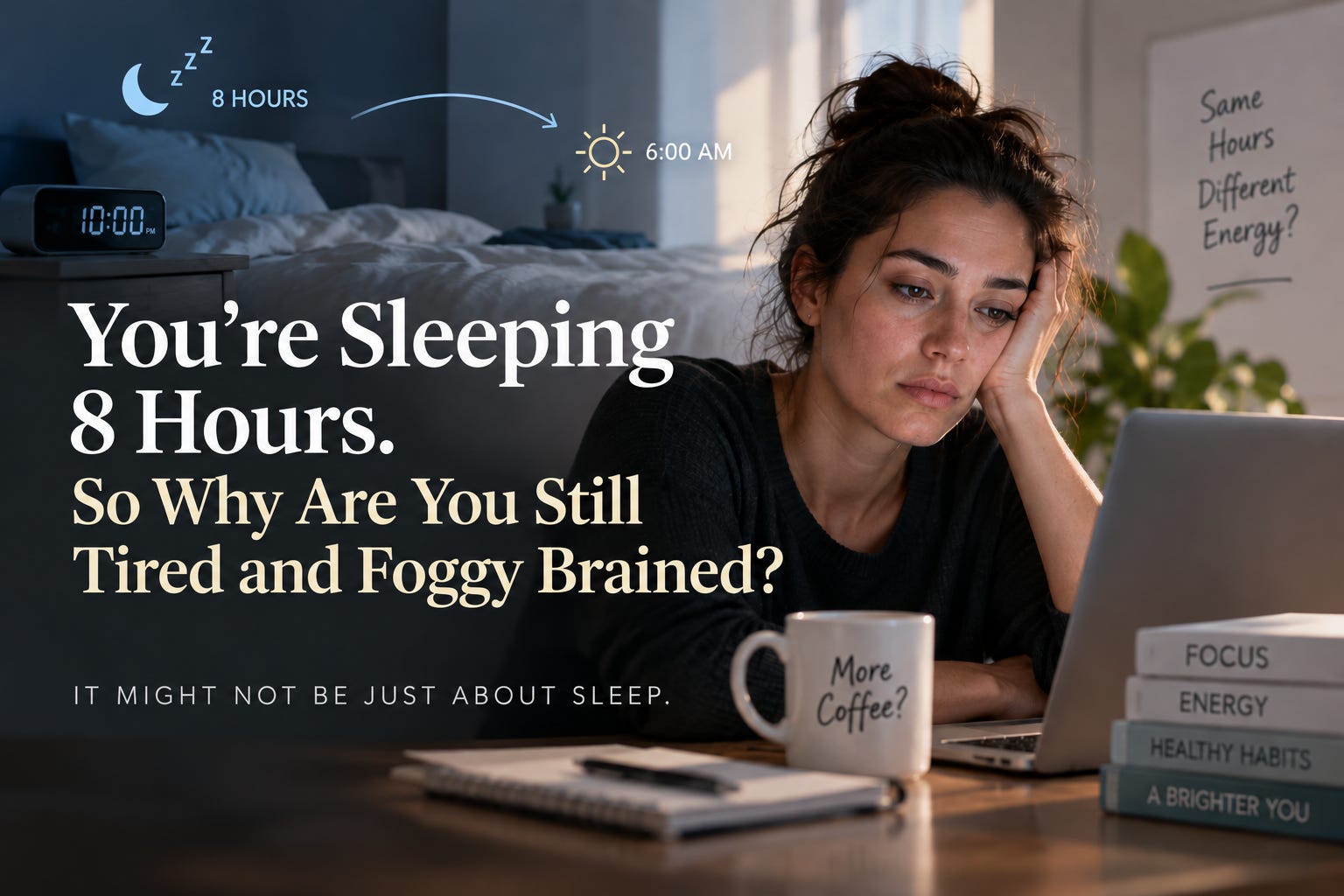
You might be one of the most diligent people when it comes to sleep. In bed by 10, getting your 8 hours, and avoiding noise and blue light. But even someone with perfect sleep habits can wake up tired and struggle with memory and concentration throughout the day.
Enough sleep is critical but recovering throughout the day (and night) is also important.
1. 8 Hours ≠ Good Sleep
When it comes to sleep, it’s about quality and quantity. Without at least 6.5-7 hours it’s hard to recover. And once you’ve had a tough work day or ate late at night or got into an argument with your partner, you’ll need closer to 8.
Then there’s sleep quality. If you wake up a lot or never get deep into Deep Sleep or you wake up before you’ve had enough REM sleep, quality will suffer. That’s true even if your Oura Ring shows that you’ve had enough bed-time.
The best barometer is to gauge how well you’re functioning the next day.
If you’re getting enough hours but regularly waking up in the middle of the night, I wrote more about why you might be waking up around 2 a.m. and what to look at here:

2. How Do You Feel When You Wake Up?
Let’s keep it simple:
Do you feel tired when you wake up?
Do you immediately need coffee to start functioning?
Do you wake up with headaches or feel foggy-headed?
Do you feel noticeably better on weekends or vacations?
Sometimes you notice the pattern when your routine changes. If you feel noticeably better on vacation, I’d want to understand what’s different.
I talked more about that here:
What Vacation Reveals About Brain Fog
Does your energy change when you get to sleep in?
Caffeine & sugar are great examples of what can affect sleep quality. But it can also signal a pattern or a clue as to what could have happened the day before.
Nothing wrong with starting your day with coffee but if you can’t function without it (or sugar) then I want to understand why.
What happens on days when you don’t need as much? Did you sleep differently? Eat differently? Have fewer meetings? Exercise? Have less stress?
3. Brain Fog Is a Symptom, Not a Disease
Over the years practicing as a physician, people have described brain fog as: difficulty concentrating, poor memory, slow recall, losing your train of thought, mental fatigue, and struggling to find words.
But brain fog describes what you’re experiencing. It doesn’t necessarily explain why you’re experiencing it.
Poor sleep can affect how you function during the day. But sleep isn’t the only thing I want to know about.
What are you eating?
How stressed are you?
Did anything change with your medications?
How’s your energy?
Your exercise?
Your mood?
Your health markers?
The more in-tune you can get with how you’re feeling and what patterns you are experiencing the easier it gets to solve this brain fog mystery.
Blood sugar is one pattern I sometimes think about when brain fog seems connected to meals or changes in energy. I wrote more about what that pattern can look like here:

4. Sleep Is Only 50% of Recovery
I’m 48, running a medical practice and working with a team while still wanting time to rock climb, exercise, cook, and have a life outside of work. I want to meet up with friends, hang out with my wife, go on hikes and travel.
I log many days with more than enough sleep but my body and brain don’t feel recovered. Maybe it was too many back-to-back meetings, emails, deadlines, or even too much exercise.
When I talk about recovery, I don’t mean there’s one recovery score we need to optimize. I’m thinking more broadly about the demands you’re placing on yourself and whether you’re giving yourself enough opportunity to recover from them.

8 hours of sleep can’t compensate for a day with very little opportunity to mentally or physically recover.
I think this is particularly relevant for busy doctors, lawyers, entrepreneurs, and working parents who are constantly juggling work, family, health, and other responsibilities while trying to perform at a high level.
You can still be productive, exercise, and get your work done. But if it’s taking more effort than before, that’s something worth paying attention to.
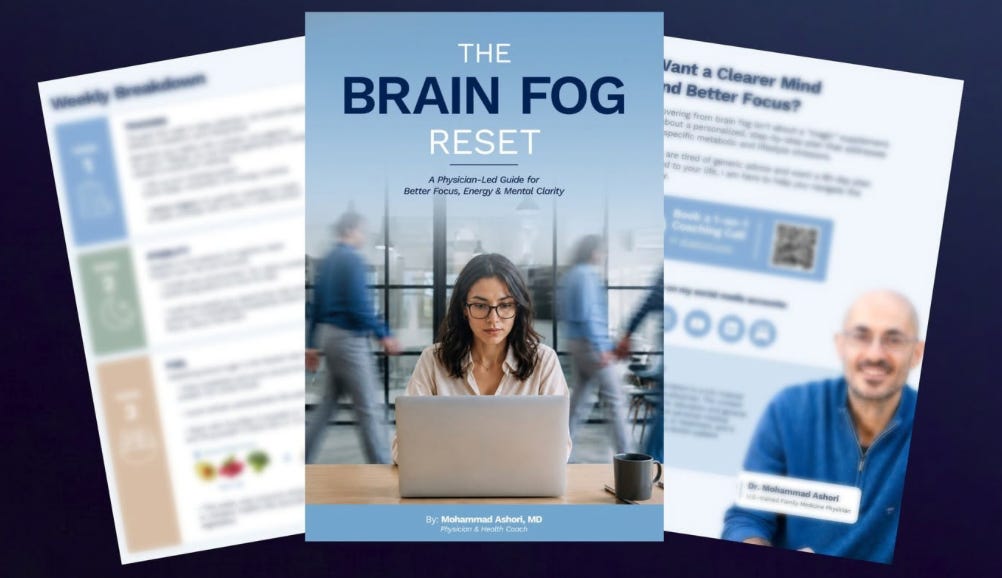
Dealing with brain fog and not sure what’s contributing to it?
I created a free Brain Fog Reset Guide to help you look at some of these patterns and identify what may deserve your attention first.
5. Be a Detective of the Patterns
I can’t fix anyone’s brain fog unless I understand when it’s happening. This is what we call patterns in clinical medicine.
At first, you might say it’s always bad or it’s random. In my experience, it’s rarely that unpredictable.
When is it worst?
How do you feel when you wake up?
Does it happen after certain meals?
Does it get worse during stressful weeks?
Do you feel different on vacation?
What seems to make it better?
What else changed around the same time?
This just needs a journal and some time to reflect. Do it on your own or with your medical team. For a week, pay attention to your sleep, meals, caffeine, stress, exercise, and when your brain fog acts up.
Don’t just assume it’s aging or stress. Always discuss something that’s persistent or getting worse with your medical team.
6. You Don’t Need to Fix Everything
Perhaps you discovered a pattern of long work hours or lack of exercise leading to worsened recovery, leaving you with more brain fog for the whole week. And you also discovered that eating pastries really makes your brain crash.
Don’t start changing everything all at once, you’ll burn out. Instead, see if you can be more present and feel the anxiety or worry when your work creeps into your personal life. Sometimes when you start addressing the elephant in the room, the craving for pastries takes care of itself.
Start with one simple daily change and track how you feel.
Still dealing with brain fog and not sure what’s contributing?
If you’ve already tried improving your sleep, nutrition, stress, or routine and you’re still struggling with brain fog, you may need a more individualized look at what’s going on.
Disclaimer:
Dr. Mohammad Ashori is a U.S.-trained family medicine physician. The content shared here is for education and general guidance. It is not personal medical advice, diagnosis, or treatment, and it does not create a doctor-patient relationship. Humans are complicated and your personal details matter. Your healthcare team is your best resource before making medical decisions, changing medications, or managing symptoms. This information is to help you add more depth to those conversations.
Follow me on:
📸 Instagram
▶️ YouTube
📘 Facebook
👽Reddit