



Perhaps you’ve found yourself mentally clear in the morning but struggling after lunch. Or you can’t concentrate well when you go too long without eating. Enter, brain fog.
It’s often sugar and caffeine that temporarily make you feel normal again. Which isn’t a major problem but things are getting worse. And your labs aren’t showing anything obviously wrong.
Welcome to the Physician-Led Health Coaching weekly newsletter. I’m Dr. Ashori, a board-certified physician turned health coach. I help people fix brain fog, fatigue, and stubborn weight before they turn into real disease.
Blood sugar does not need to reach the diabetic range to affect how alert, focused, or mentally steady someone feels. Sudden rises and fast falls affect your cognitive function even with normal fasting glucose or A1C.
1. You Feel Like a Zombie After Meals
The classic brain fog situation I see in my practice is that you eat breakfast or lunch and feel sleepy, unfocused, or mentally slower 1-3 hours later.
Meals dominated by refined carbohydrates can cause glucose to rise quickly. The subsequent drop may leave some people feeling tired or foggy, especially when the meal contains little fiber, lean proteins, or the right fats.
The classic examples are:
Cereal and juice
A bagel by itself
Pastries or sweetened coffee
A large portion of white rice or pasta without veggies to slow their absorption
Pay attention to how you feel after a refined-carbohydrate meal with how you feel after a meal containing adequate fiber, proteins, and fats. Jot down some times in the day or week when your brain fog feels most pronounced.
2. Irritable, Shaky, & Headaches When You Eat Late
Missing lunch shouldn’t make you feel anxious, irritable, weak, headachy, or unable to think clearly. Hungry, yes, but it shouldn’t affect your baseline brain function.
A rapid glucose decline, combined with stress hormones such as adrenaline, can produce similar brain fog symptoms even when glucose has not fallen into a medically dangerous range.
Ask yourself, does the problem predictably appear when meals are delayed and improve soon after eating?
The best strategy here is to have consistent meal timing and more substantial meals rather than constant snacking. Each meal should have adequate fiber (to slow glucose absorption), protein (satiation), and fats (absorb nutrients.)
3. Rapidly Crashing Energy & Concentration
Most of us alternate between feeling productive and struggling with work. But with adequate rest and proper nutrition, you should be able to enjoy productivity without being hindered by less taxing work.
A common pattern might be:
Clear in the morning
Sluggish after breakfast or lunch
Better after coffee or something sweet
Foggy again a few hours later
Mental performance usually should not rise and fall dramatically based on the last snack or cup of coffee. Large swings may indicate that meals, sleep, caffeine, stress, and glucose regulation are interacting poorly.
Track your meals, energy, and concentration for 1 week. You don’t need a glucose monitor.
A simple record could include:
What you ate (take a photo)
When the fog started
Whether you were hungry, shaky, or craving sugar
What made the symptoms improve
Blood sugar is only one possible contributor to brain fog. Sleep quality, stress, medications, nutrient deficiencies, hormones, and several other patterns can cause similar symptoms. If some of these signs sound familiar, my free Brain Fog Reset Guide will help you look at the bigger picture and decide where to start.
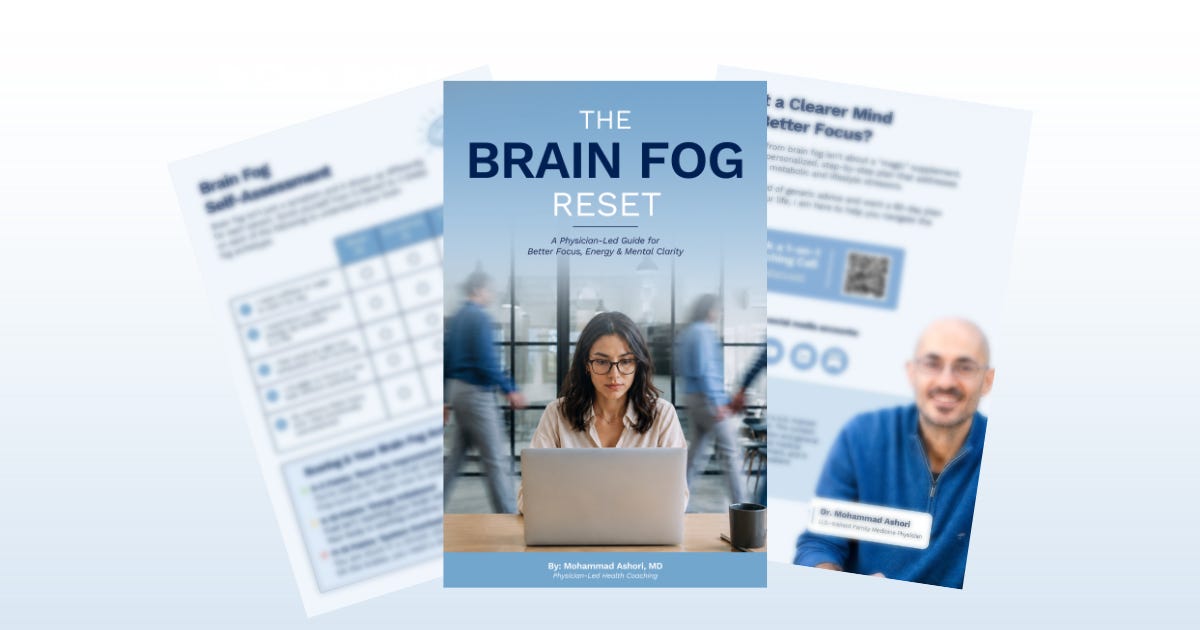
The Brain Fog Reset Guide contains:
The most common overlooked causes of brain fog
A simple self-assessment
Practical changes readers can begin immediately
The exclusive health-coaching gift included with the campaign
4. Depending on Sugar or Caffeine to Feel Normal
Coffee or the occasional sweet treat should be a treat for the taste buds but not a crutch for the brain to function daily.
Sugar temporarily raises glucose, while caffeine temporarily masks fatigue. Neither addresses the root cause of why energy & concentration are crashing.
Needing morning coffee (me!) is not proof of a blood-sugar problem. But needing repeated rescue throughout the day might be. This is one of the reasons I’ve cut back by caffeine intake and feel better overall.
Do you need something sweet each afternoon?
Does caffeine briefly improve your brain fog?
Are cravings strongest after less-balanced meals?
The right strategy is to improve the overall meal structure and not necessarily cutting out the caffeine. Once the metabolic system is repaired, the occasional sweet treat will be a welcomed treat, not a crutch for your brain.
5. Signs of Poor Metabolic Health
Metabolic health is at the heart of preventing heart disease, diabetes, strokes, dementia, liver disease, and joint degeneration. We have a few strong clues to recognize it.
Possible accompanying clues
Increasing waist circumference
High LDL-C or apoB or triglycerides
Elevated fasting glucose or insulin
A history of gestational diabetes or polycystic ovary syndrome
A strong family history of type 2 diabetes
Sleep apnea
Increasing blood pressure
While no individual indicator confirms that blood sugar levels trigger brain fog, a metabolic connection becomes increasingly likely when multiple signs appear in tandem.
I don’t rely on a normal blood glucose or A1C to tell me what my patient’s metabolic health is up to. Because it’s so prevalent and easy hide, I often go digging with some of the tests mentioned above.
Summary: Look for the Pattern, Not One Symptom
Brain fog is not always caused by blood sugar, but it also should not automatically be dismissed as stress, aging, or a lack of motivation.
The Brain Fog Reset Guide covers the other common contributors and provides the next step you can take to regain your focus and energy.
Disclaimer:
Dr. Mohammad Ashori is a U.S.-trained family medicine physician. The content shared here is for education and general guidance. It is not personal medical advice, diagnosis, or treatment, and it does not create a doctor-patient relationship. Humans are complicated and your personal details matter. Your healthcare team is your best resource before making medical decisions, changing medications, or managing symptoms. This information is to help you add more depth to those conversations.
Follow me on:
📸 Instagram
▶️ YouTube
📘 Facebook
👽Reddit