



Most people think heart health comes down to one number, LDL cholesterol.
If that number looks “normal,” they assume they’re fine.
But cardiovascular disease is a much more complex process.
Welcome to the Physician-Led Health Coaching weekly newsletter. I’m Dr. Ashori, a board-certified physician turned health coach. I help people fix brain fog, fatigue, and stubborn weight before they turn into real disease.
Main Contributors to CVD
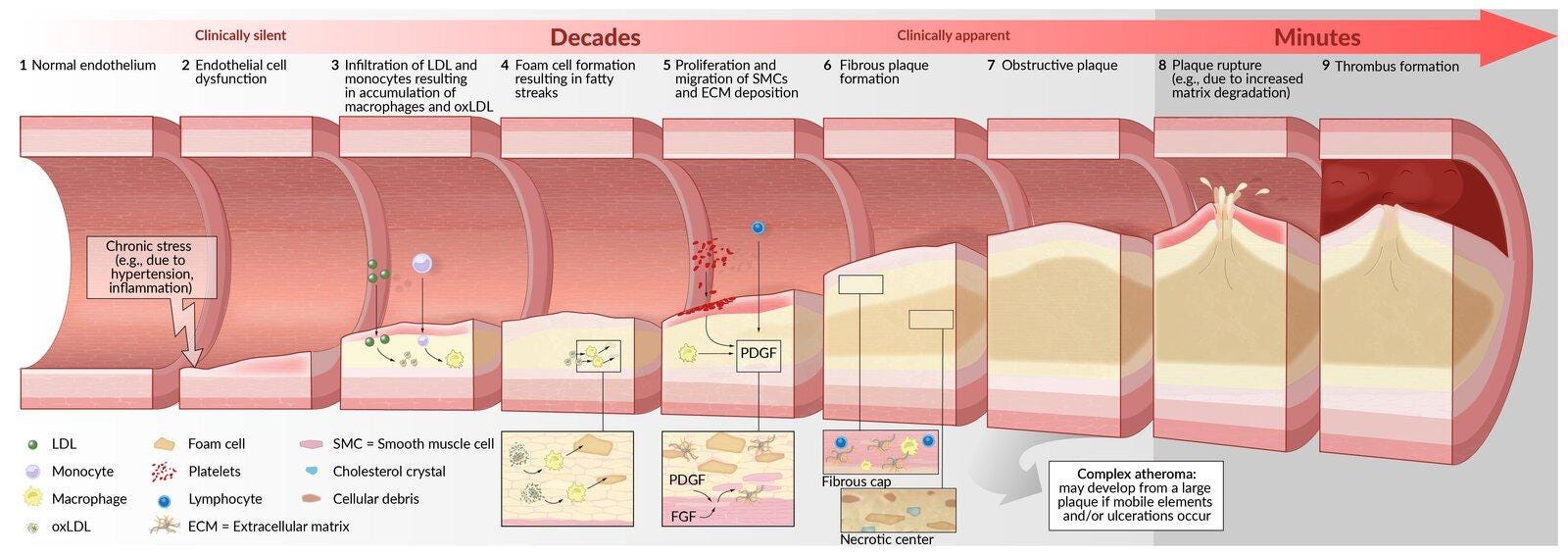
Cardiovascular disease (CVD) isn’t a single process. That’s why some people with high cholesterol don’t develop a heart attack or stroke. While another with normal lipids, does.
The main contributors are:
Lipoprotein burden
Metabolic disease
Endothelial damage
Inflammation
Thrombogenicity
1. Metabolic Health
One of the biggest drivers of elevated LDL-C is poor metabolic health. Yes, even more so than saturated fat intake.
You can have a lot of dangerous lipoproteins floating in the blood, but they may not be able to penetrate the endothelium and deposit as plaque if your metabolic health is optimal.
The biomarkers you can track are:
Tg/HDL ratio
2-hour OGTT
Liver ALT
Uric acid
Why it matters:
If your metabolic health is healthy, your chance of developing insulin resistance and arterial plaque is much lower.
2. Lipoproteins
The particles that actually form into plaque are called lipoproteins which can be measured directly.
These are the lipoprotein biomarkers to track:
ApoB
non-HDL cholesterol
HDL-C
Why it matters:
These measure particle burden, so they are much more accurate than serum cholesterol.
3. Inflammation & Damage
Most of us will have some degree of plaque in our coronary and cerebral arteries. But how stable is that plaque? High inflammation means higher chance of plaque rupture.
Biomarkers for inflammation:
hs-CRP
Homocysteine
Why it matters:
Plaque doesn’t just form. It forms in an inflammatory environment and its stability is affected by inflammation.
4. Body Composition
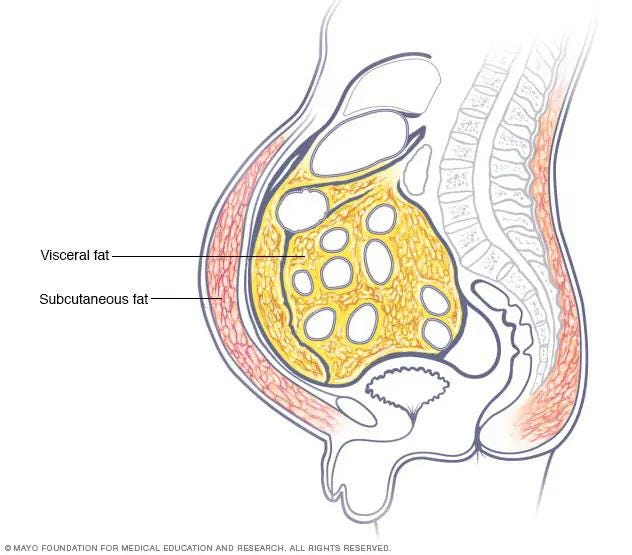
I mostly care about visceral fat these days. It seems that for most adults subcutaneous fat isn’t as concerning.
Biomarkers to track:
DEXA scan (or MRI)
Why it matters:
Two people can weigh the same and have completely different risks.
5. Cardiovascular Function
How healthy are your mitochondria, muscles, and your aerobic capacity?
Biomarkers to track:
VO2 max (or the Cooper Test)
HRV (heart rate variability)
RHR (resting heart rate)
Blood pressure
Why it matters:
Should you ever have a plaque rupture, how resilient is your heart and blood flow? This makes all the difference between angina and sudden cardiac death.
What I Don’t Routinely Track (And Why)
Lipoprotein(a)
The evidence is still evolving. And while the AHA recently recommended it, the data is still quite weak.
It may matter in specific cases. And when it’s indicated, I order it on such patients.
But for most people, it doesn’t change what we actually do. That’s because the other risk factors paint 99% of the picture.
Coronary Artery Calcium scan (CAC)
Popular and cheap. It tells you if calcified plaque is already there.
It doesn’t tell you if you have soft plaque. And it doesn’t tell you if your plaque is unstable or stable.
The problem with adding more tests is that you don’t know when to stop.
There are endless tests available to assess the cardiovascular system:
CT angiogram
Echo
EKG
Troponin
BNP
At some point, you’re no longer improving health. You’re just collecting data.
In my practice, I’m not trying to find disease easier. My goal is to prevent it long before anything can show up on a test.
If this resonated with you, I work with a small number of clients to figure out what’s actually going on behind their symptoms to build a plan that works for them.
If you want help with this:
Quick Self-Check
Ask yourself:
How’s my energy throughout the day?
How’s my stamina?
Is my sleep restful?
Is my body composition good?
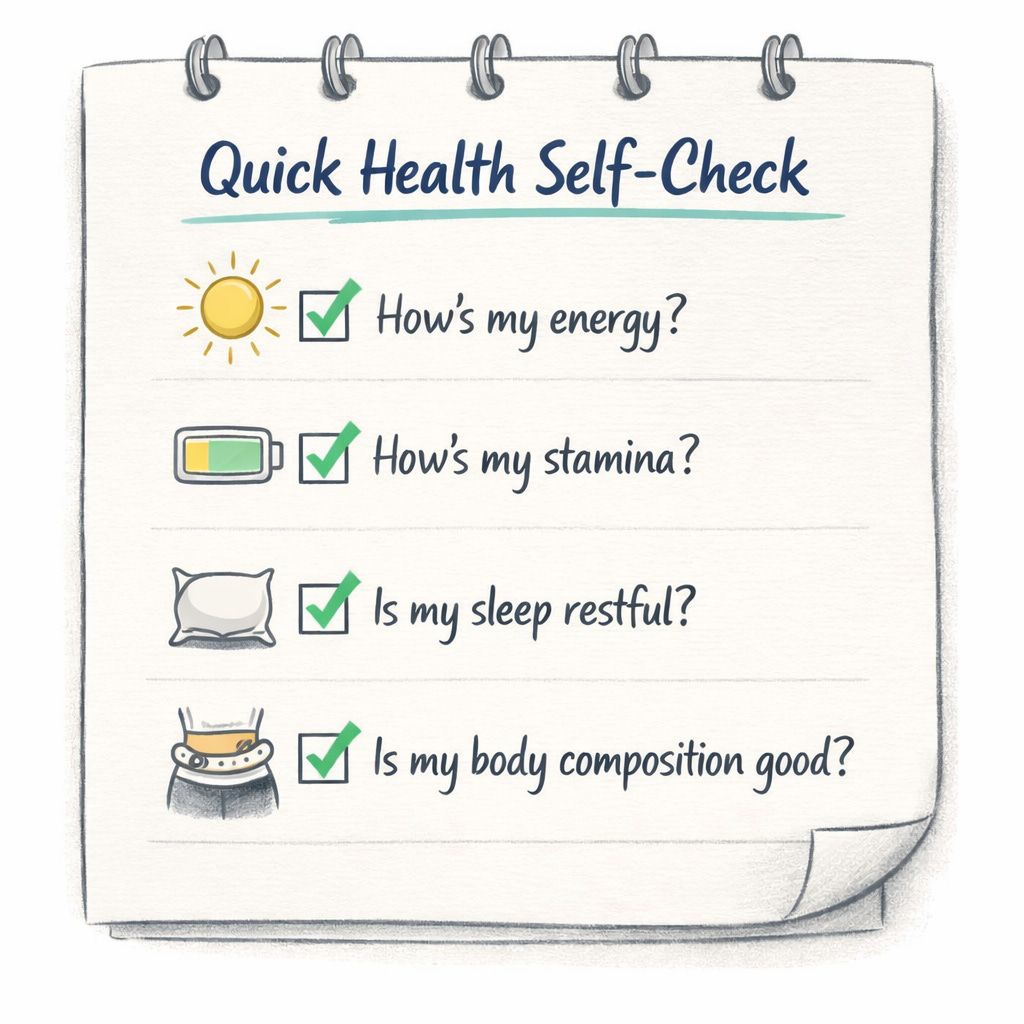
If these are off, your cardiovascular system is already under stress.
Even if your labs look “normal.”
What are your favorite tests to track your heart health?
Disclaimer:
Dr. Mohammad Ashori is a U.S.-trained family medicine physician. The content shared here is for education and general guidance. It is not personal medical advice, diagnosis, or treatment, and it does not create a doctor-patient relationship. Humans are complicated and your personal details matter. Your healthcare team is your best resource before making medical decisions, changing medications, or managing symptoms. This information is to help you add more depth to those conversations.
Follow me on:
📸 Instagram
▶️ YouTube
📘 Facebook
👽Reddit