


The biggest risk to your health these days might be the lab test which you should have never gotten in the first place.
I have 2 patients in my practice with confusing lab numbers. Both came to me because their doctors were treating the lab values, not the patient.
Welcome to the Physician-Led Health Coaching weekly newsletter. I’m Dr. Ashori, a board-certified physician & health coach. I help people fix brain fog, fatigue, and stubborn weight before they turn into real disease.
80 Yo Active Woman
Meet H., an active 80 yo woman living on her own. She does regular exercises, goes for walks, cooks her own meals, and takes good care of herself.
Her A1C, a marker for diabetes, was going up, so her doctor recommended a dietary change. She was even diagnosed with prediabetes and offered meds.
45 Yo Sedentary Man
Meet M., a 420 lb man who had been trying to lose weight for a few years. Other than his weight, his labs were perfect. His total cholesterol was under 150. His A1C was 5.2. Never had a problem with his blood pressure.
He assumed this meant great health. And, in fact, his doctors were treating the lab values and only advised him on weight loss.
Treating a Lab Value
Even as medical students we learned to not get fooled by normal or abnormal lab values. I’m certain that wasn’t training unique to our medical school at UCLA.
If someone’s blood sugar is going up but they have no risk for diabetes, what’s the value of taking any action? A high A1C doesn’t cause diabetes.
A better question is why someone was checking this 80 yo’s A1C.
In fact, she suffered a lot from that dietary change. She developed severe diarrhea, then a bout of rectal bleeding, which needed an extensive workup. After nearly a year of chasing symptoms, she switched back to her previous diet. And she’s back to normal.
Understanding Root Causes
You don’t just keep repainting your ceiling when you see water stains from the rain. Your contractor will recommend repairing or replacing your roof.
With health, addressing the root cause is even more important because you can’t replace your roof and patch jobs rarely are successful.
M.’s doctors told him to lose weight because his lab values were normal, it wasn’t urgent. But it actually was - and not just urgent, emergent.
He ended up in the emergency room with several serious issues related to his weight. Not only did he end up needing emergency surgery, but because of that his entire lifestyle will need to change moving forward.
The Value of a Lab Result
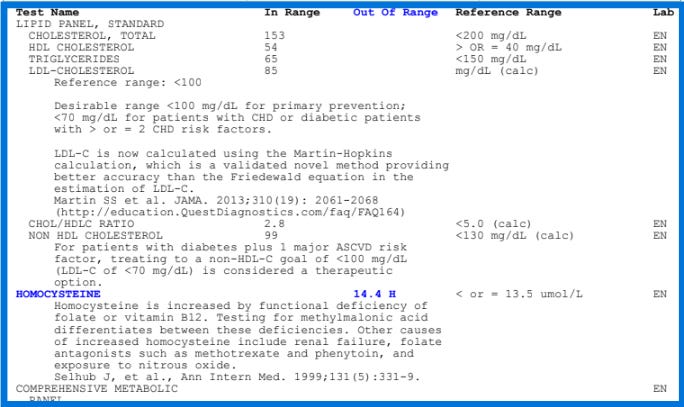
A popular trend right now is the 200-point lab tests that many companies advertise. Patients book a call with me to go over these fancy printouts. There’s almost always something abnormal.
Even during your annual physical it’s quite likely that your doctor will order a CBC, CMP, A1C, Lipid panel, and TSH.
Unfortunately, such screening tests cause so much havoc for patients. They’ll have to chase each abnormal result and perhaps start a medication. After all, you can’t unsee a high LDL-C or a high liver enzyme.
But just because someone’s liver enzymes are high it doesn’t mean something is wrong with their liver. Lots of benign things can raise your liver enzymes. And it’s quite unlikely that your 10-minute primary care appointment will tease that out. So, off to the hepatologist you go.
Frustrated by one-size-fits-all advice? I take on a limited number of 1-on-1 coaching clients to dive deep into your unique health history, identify your physiological triggers, and design a sustainable plan to help you feel your best.
Knowing When to Order a Test
Both of these patients are doing much better. H. is back to her old lifestyle and feeling great. And M. is on track to lose a lot of weight, albeit it’ll take a while to get there.
The right time to get a blood test is when the current information is not enough. When you’ve exhausted all available knowledge and you still suspect a risk, that’s when you order a very specific test.
If I’m suspecting a blood sugar problem in H. I’m not going to get an A1C which is very non-specific in someone of her ethnic background and age. I would instead get a fasting insulin. Which, in fact, was normal for her.
Step 1: Define risk first, don’t think about the test.
Step 2: Look at the person, not just the wall of numbers on a page.
Step 3: Ask your doctor, “Okay, so what?”
Disclaimer:
Dr. Mohammad Ashori is a U.S.-trained family medicine physician. The content shared here is for education and general guidance. It is not personal medical advice, diagnosis, or treatment, and it does not create a doctor-patient relationship. Humans are complicated and your personal details matter. Your healthcare team is your best resource before making medical decisions, changing medications, or managing symptoms. This information is to help you add more depth to those conversations.
Follow me on:
📸 Instagram
▶️ YouTube
📘 Facebook
👽Reddit
Well said….am going to pass this on to friends.
As a retired RN, although awake for decades with regard to the limits of medicine as we see it today, I was powerfully influenced by Malcolm Kendrick and Doctoring Data & others.
It has been a steep learning curve over 50yrs.