


We feel the consequences of stress often before we recognize stress as an emotion in our body. The symptoms precede the realization of stress by a few years.
Putting up With Stress
In my second year of medical school I was bloated, had acid reflux, bouts of diarrhea and constipation. I assumed it was what I ate.
Most of the time my mood was fine. But it took very little to overwhelm me or make me irritated.
Just a few months ago I was onboarding new team members in my practice and the first thing I noticed was that my stamina in the gym was lower. I hadn’t changed anything else.
My amygdala was likely firing constantly with no way for me to override it. This crashed my nervous system, unable to make my muscles fire the way I wanted.
Crashing Focus
The 2009 Lupien et al study tracked how adults with higher cortisol levels often have lower cognitive function. This isn’t dementia but it would certainly feel that way to you.
That’s why stress management is our top priority for any health coaching client experiencing brain fog.
Chronic Pain
Our body has a natural way of suppressing excess pain signals. But chronic stress lowers the brain’s ability to mute pain. This was demonstrated in Pola et al, 2024.
I felt this in my lower back in 2016. I was slowly transitioning out of the insurance-based world and launching my own medical practice came with stress. No matter what I did, I felt pain in my back.
Immune System Couldn’t Recover
Between 2010-2012 I was always sick. I was a full-time physician at Kaiser Permanente in the family medicine department, I picked up shifts in the urgent care and in pediatrics, and I had way too many hobbies outside of medicine.
High catecholamines suppress immune cells such as NK cells and increase inflammatory molecules like IL6. This combination crashes the immune system, which is needed not just for fighting off infections but fighting off cancer cells.
Segerstrom et al reviewed 300 articles to show that while fight-or-flight stress can improve the immune system temporarily, chronic stress caused global suppression of it.
10 Things I Teach My Patients About Stress
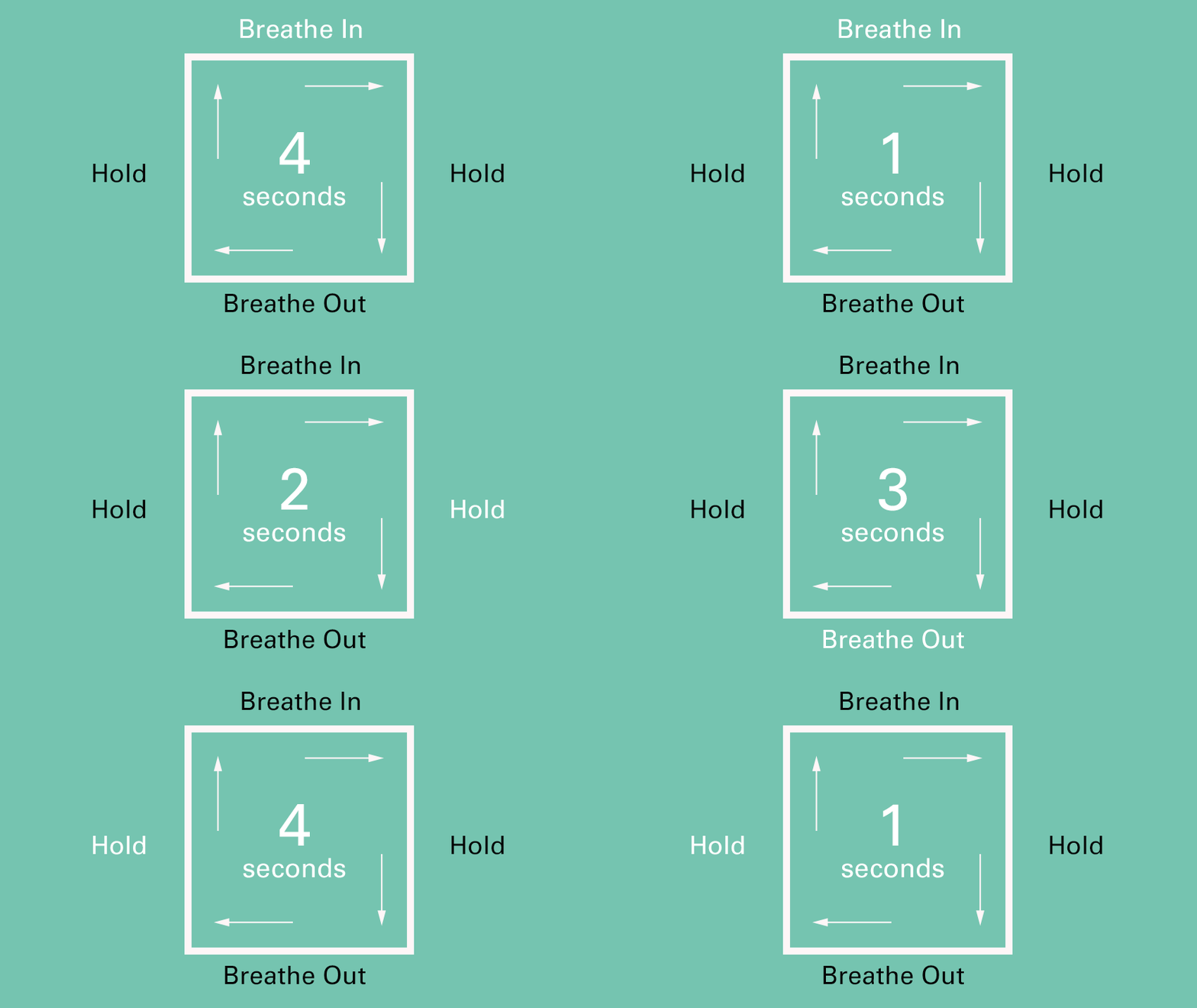
1. Perform breath techniques to lower stress (and blood pressure).
You can try the box breathing method below. My personal favorite is the 4-7-8 breath.
The Ma, X. et al (2017) study showed that diaphragmatic breathing reduces cortisol levels and improve negative effects of stress.
2. Get natural sunlight.
While many fear skin cancer, we forget all the benefits from the sun. It’s not just about vitamin D but also mood.
Mead (2008) showed how solar radiation affects the body through non-visual pathways, boosting serotonin to alleviate stress.
3. Go for a walk or perform an intense workout.
I do my health coaching meetings when I go for a walk. It’s better than sitting behind a computer screen.
The Mikkelsen et al. (2017) clinical review demonstrated that regular physical activity significantly lowers subjective anxiety, panic disorders, and perceived psychological stress.
4. Journaling is like talking to a therapist.
If there’s something bothering you, talk about it, journal about it, or at least do some mindfulness to avoid obsessing over it.
The Glass et al. (2019) trial showed that regular expressive writing and emotional journaling significantly relieve psychological burden, ordering associated thoughts to decrease perceived distress.
5. Plan for more sleep after stressful days.
When stressed, the same 8 hours in bed will be more like 6. So add a little more bedtime if possible.
The Hirotsu et al. (2015) study confirmed that high psychological stress increases nighttime cortisol and impairs the deep, restorative sleep phases.
If this resonated with you, I work with a small number of clients to figure out what’s actually going on behind their symptoms to build a plan that works for them.
If you want help with this:
6. Stretching your muscles lowers your stress hormones.
If you don’t like to work out at least consider getting on the ground and stretching your joints.
Eda et al measured salivary stress hormones and showed that stretching decreased cortisol and increased testosterone.
7. Caffeine is the enemy of stress (and sleep.)
During high-stress days, it’s best to cut back on caffeine. It’ll take longer to get cleared from the body, negatively affecting sleep. Switch to half-caff coffee for a while.
The Richards and Smith (2015) cross-sectional study established that higher caffeine consumption is strongly linked to elevated anxiety and higher stress scores.
8. Socializing can be frustrating when stressed, but it’s therapeutic.
When I’m stressed I don’t want to socialize. But if I can do it in a supportive space, it’s healing.
The Ozbay et al. (2013) clinical trial demonstrated that high social support alters neurobiological pathways to suppress cortisol spikes during acute stress.
9. High-intensity exercise during stress is as bad as caffeine.
I’ve learned from my patients that intensity has to go down when stress levels are high.
The Budde et al. (2015) study showed that high-intensity workouts elicit a sharp physiological stress response that can amplify existing mental burnout.
10. Stress is physiological, not cognitive. You can’t think your way out of it.
Overanalysis, repetitive thinking, and having internal dialogues often are more harmful than helpful.
The Zainal and Newman (2021) clinical study proved that chronic cognitive overanalysis and worry disrupt basic autonomic recovery systems, trapping the body in a prolonged stress loop.
Disclaimer:
Dr. Mohammad Ashori is a U.S.-trained family medicine physician. The content shared here is for education and general guidance. It is not personal medical advice, diagnosis, or treatment, and it does not create a doctor-patient relationship. Humans are complicated and your personal details matter. Your healthcare team is your best resource before making medical decisions, changing medications, or managing symptoms. This information is to help you add more depth to those conversations.
Follow me on:
📸 Instagram
▶️ YouTube
📘 Facebook
👽Reddit