


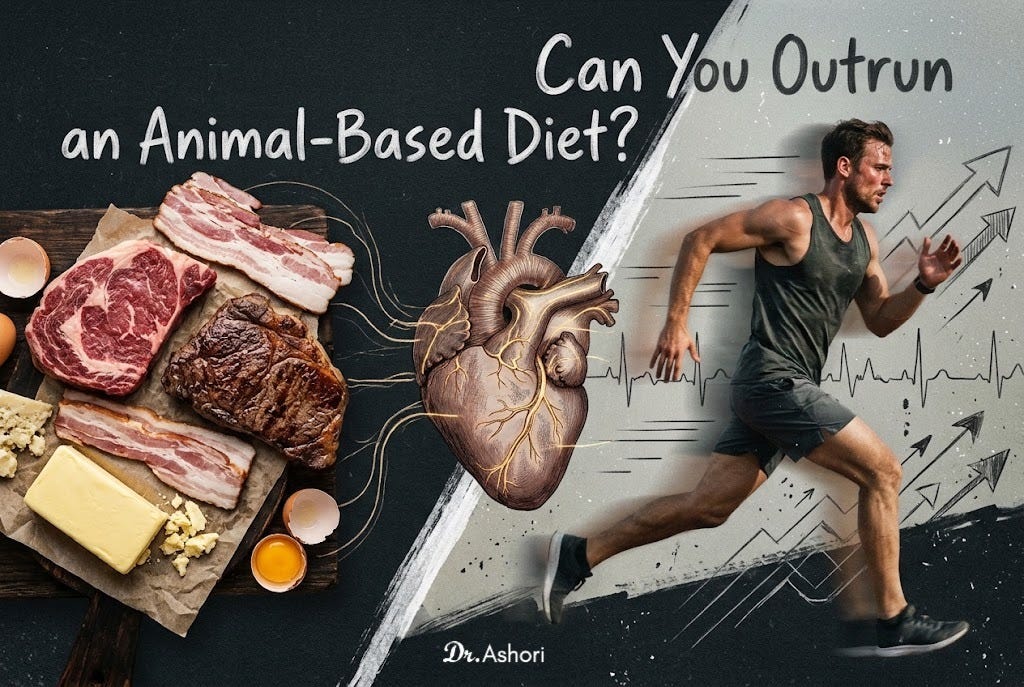
Suppose someone eats mostly animal foods, stays lean & fit, and has good blood pressure and blood sugar. How much reassurance should those things provide if their LDL cholesterol (or apoB) is high?
This is one of the most common questions I get, especially these days when saturated fat and meat have developed a negative reputation.
Welcome to the Physician-Led Health Coaching weekly newsletter. I’m Dr. Ashori, a board-certified physician & health coach. I help people fix brain fog, fatigue, and stubborn weight before they turn into real disease.
Exercise + Coronary Artery Disease
A 2019 study followed almost 22,000 men for about 10 years. The most active men were more likely to have substantial calcium buildup in their coronary arteries, but their high activity levels were not associated with higher death rates, even among those with substantial calcium.
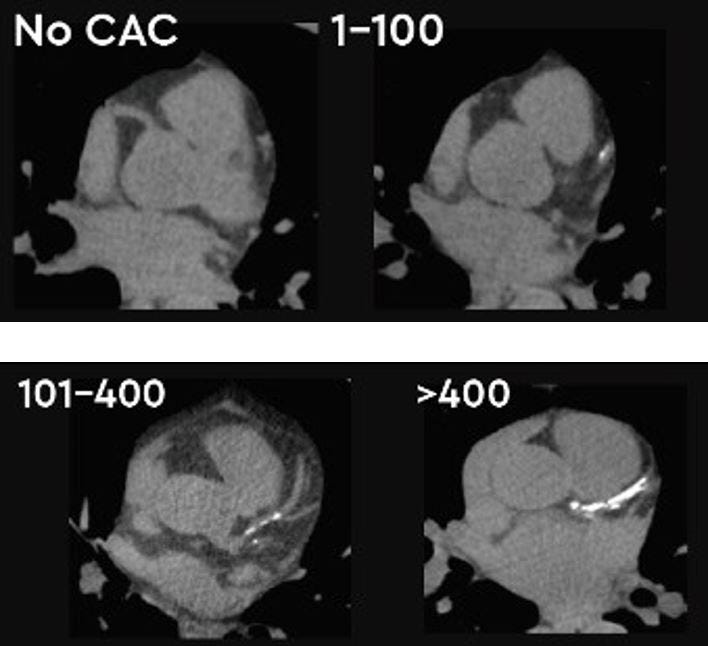
Having plaque and having a fatal cardiovascular event are related, but they are not interchangeable outcomes. And while being incredibly active may mean accumulating more calcification in your arteries, dense calcified plaque is often more stable and less prone to rupture than soft plaque.

Does Exercise Reduce Plaque Buildup?
At the same time, fitness doesn’t guarantee plaque-free arteries. This 2023 study found more coronary plaque in lifelong male endurance athletes than in healthy non-athletes, including plaque that was not calcified.

This study examined artery scans, not whether exercise caused more heart attacks. It also did not test animal-based diets. And, remember, what you care about is heart attacks, not how much plaque you have.

What About Inuits?
Now that me and my wife moved to Alaska, it’s worth talking about the traditional Inuit diets. In a study of 1,570 Inuit adults, a pattern with more fish and less sugar was associated with lower odds of several cardiovascular conditions, while a pattern with more marine mammals and added fat was associated with more coronary heart disease.

Several estimates were statistically uncertain, and the study was a snapshot rather than long-term follow-up. It cannot tell us that one food caused or prevented disease.

Does Being Fit Make High LDL Less Important?
Being fit, having normal blood pressure, and keeping blood sugar in a healthy range are reassuring, but do these characteristics mean that atherogenic particles (LDL-C or apoB) are less important?
There is still evidence that lowering LDL reduces cardiovascular events even in people whose overall risk is relatively low. An analysis of 27 randomized trials found benefits from LDL-lowering statin treatment even in lower-risk participants.

That’s an absolute risk reduction (ARR) of 1.1 percentage points, roughly 5.2% down to 4.1%, or an NNT of about 91 over 5 years. It’s important to mention that these events included heart attacks/coronary deaths, strokes, and coronary revascularization procedures, not just heart attacks. And, this study did not require high fitness, normal body weight, or normal metabolic markers.

The distinction is between having a lower overall risk and having no added risk from elevated cholesterol. Someone can have several favorable health factors and still have another factor worth discussing.
The unanswered question is how much exercise changes their individual risk that stems from that elevated saturated-fat diet.
Taken together, these studies do not establish that activity cancels out the cardiovascular risks of a particular diet. They also do not justify assuming that everyone eating mostly animal foods has the same risk. The foods involved, cholesterol levels, other health factors, and years of exposure all deserve attention.
Frustrated by one-size-fits-all advice? I take on a limited number of 1-on-1 coaching clients to dive deep into your unique health history, identify your physiological triggers, and design a sustainable plan to help you feel your best.
Moderation Wins
Of course, you don’t have to eat bacon, butter, cheese, and eggs for breakfast, steak and lobster for lunch, and lard biscuits, pork, and sour cream for dinner. You could balance things out.
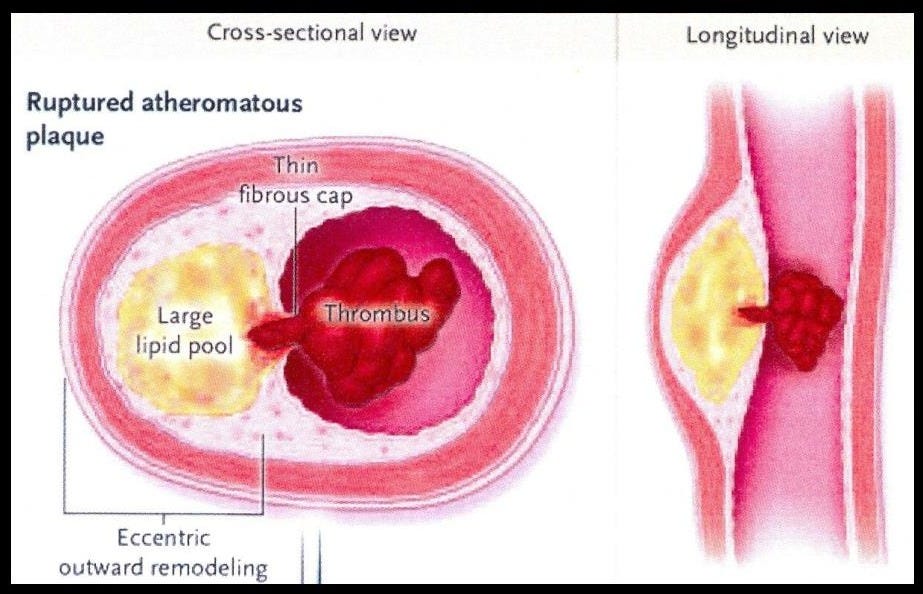
If you do lean very heavy towards higher saturated fat diets, the evidence says that you’ll amass more plaque over time. Could this plaque kill you? Well, plaque alone isn't a guarantee of a heart attack, nor does having a low calcium score make you bulletproof. Rupture and thrombosis are what cause the acute event.
But that’s the thing about the human body. We can offset one risk with another. Fit people tend to have less problems with mental health, even if their stress levels are higher. People with higher blood pressure who have better diets have lower risk of cardiovascular disease. And those who eat more saturated fat tend to have a lower risk of actual adverse cardiovascular events (heart attacks and strokes) if they are very active and in otherwise great health.
But, lower doesn’t mean none.
Disclaimer:
Dr. Mohammad Ashori is a U.S.-trained family medicine physician. The content shared here is for education and general guidance. It is not personal medical advice, diagnosis, or treatment, and it does not create a doctor-patient relationship. Humans are complicated and your personal details matter. Your healthcare team is your best resource before making medical decisions, changing medications, or managing symptoms. This information is to help you add more depth to those conversations.
Follow me on:
📸 Instagram
▶️ YouTube
📘 Facebook
👽Reddit