



Our modern narrative is that aging is something that happens to you and you have little control over it. Far from it.
We’ve all collected a few habits over our lifetime. Most of them we haven’t questioned. Let’s do that in this article so that you can age healthy, age well.
Welcome to the Physician-Led Health Coaching weekly newsletter. I’m Dr. Ashori, a board-certified physician turned health coach. I help people fix brain fog, fatigue, and stubborn weight before they turn into real disease.
1. What’s “Aging Well”
Most people define aging well as “not getting sick.” That’s a really low bar to set.
I believe that you can age well without feeling too much pressure or feeling blamed for not doing it right.
Aging well means:
You have the energy you need to live your life.
You recover well from illness or slammed work weeks.
Stress doesn’t excessively spill into sleep, eating, or mood.
Your body feels stable, not fragile.
I love Dr. Andrew Weil’s definition of healthy aging. He’s my favorite physician author on the topic.
“Health is wholeness and balance, an inner resilience that allows you to meet the demands of living without being overwhelmed.”
— Dr. Weil
2. We Assume Normal Aging = Disease
Aging creeps up on you when you normalize day to day health changes. Your knee pain is at first subtle. Next, you’re not exercising, but it doesn’t feel all that bad at first.
Humans normalize slow change because it’s less of a shock to the system.
We believe that low energy is normal - “it’s part of getting older.” It’s not. That’s called fatigue, and it’s a medical condition that should be addressed early.
You accept poor sleep as normal.
You power through stress instead of addressing the root cause.
You normalize joint pains as arthritis.
You assume your brain gets less sharp with age.

When I lived in Spain I would see people in their 80s and 90s out for a walk early in the morning and again after dinner. Vibrant, active, and oblivious to the “aging narrative.”
3. There Won’t Be a Wake-up Call
By the time a health problem is on your radar, it’s tough to do something about it. Habits tend to grow roots unless you’re regularly taking inventory.
Waiting usually means:
Fewer options to change.
More effort for the same results.
Change is driven by desperation.
Healthy aging works best when you notice small changes early, normalize what’s going on, and create a health strategy you actually believe in.
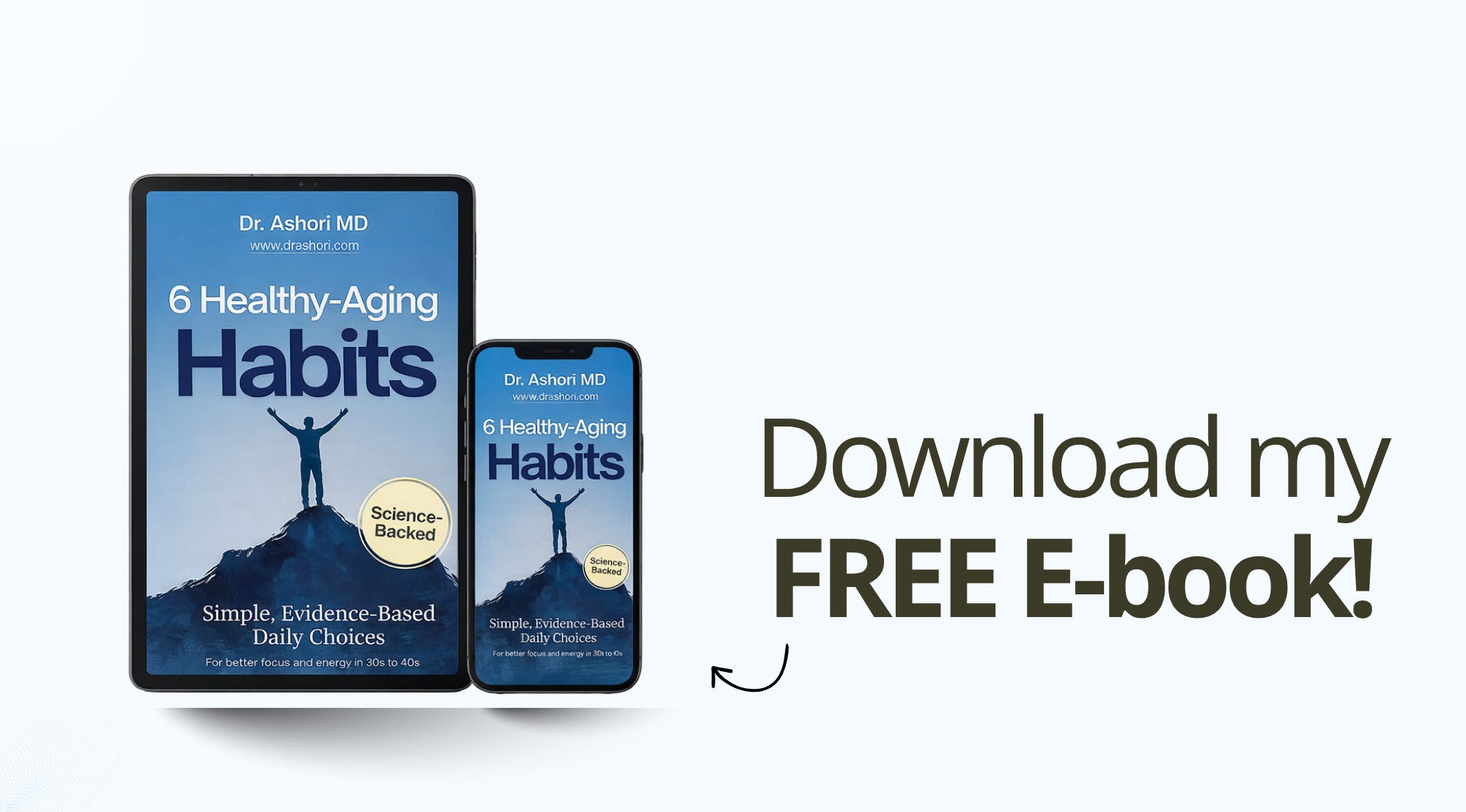
6 daily habits that improve energy, sleep, and long-term health:
Download the free guide!
I see it in my patients with diabetes, who usually get their official diagnosis in their 40s or 50s. But long before that there was the frozen shoulder, recurrent infections, urination problems, poor sleep, skin changes, and crashing long before bedtime.
4. Creating a Check-in Habit
I don’t think we should let someone else define health for us. Health is a personal topic and often a decision.
What does health mean to you?
Ask yourself from time to time:
Do I have consistent energy most days?
Am I sleeping in a way that feels restful?
Can I handle stress well without feeling drained?
Does my body recover well after injury or infection?
I’m 47 and it takes a bit longer for my joints to loosen up when I stretch. That’s not a joint problem. It just means I’ll feel better if I give myself more time stretching.
5. Awareness is Much More Powerful Than Motivation
It’s hard to change if you don’t feel motivated. But motivation doesn’t happen to us. It’s something you have actively find for yourself.
Doing a symptom inventory helps you figure out what’s out of sorts. The motivation comes from valuing your future self and how you feel.
I try to be aware of my body. Not excessively, because that just adds anxiety. But that’s what they mean when they say, “You’re in tune with your body.”
6. Take The Quiz!
I sifted through all the data on aging and turned it into a quiz. This questionnaire accurately calculates if you are on track to age well.
Of course, nobody can predict the future. But more often than not, healthy habits tend to result in a healthy body.
You Might Be Aging Faster Than You Think
Do you know Your Healthy Aging Score?
Find out which area is holding you back and what to do next.
7. Common Healthy Aging Myths
If my labs are normal, I’m doing fine.
Symptoms matter more than lab biomarker.
Low energy and brain fog is age-related.
It’s usually stress related or not recovering well.
I don’t have time to deal wit my health now.
Your body decides when you’ll pay attention to it.
Healthy aging means living the perfect life.
Just a 10-20% improvement goes a long way.
If this resonated with you, I work with a small number of clients to figure out what’s actually going on behind their symptoms to build a plan that works for them.
If you want help with this:
Disclaimer:
Dr. Mohammad Ashori is a U.S.-trained family medicine physician. The content shared here is for education and general guidance. It is not personal medical advice, diagnosis, or treatment, and it does not create a doctor-patient relationship. Humans are complicated and your personal details matter. Your healthcare team is your best resource before making medical decisions, changing medications, or managing symptoms. This information is to help you add more depth to those conversations.
Follow me on:
📸 Instagram
▶️ YouTube
📘 Facebook
👽Reddit