


Maybe you’re getting to that age when you’re wondering if you’re still fit. You ran in high school or played competitive sports but now you lost a step. So, are you still fit in all the categories that matter?
To be fit means you’ll recover faster from illnesses, avoid many diseases, and if you ever need a serious treatment for something like a heart attack, sepsis, or cancer you’ll fare much better than the average person.
Welcome to the Physician-Led Health Coaching weekly newsletter. I’m Dr. Ashori, a board-certified physician & health coach. I help people fix brain fog, fatigue, and stubborn weight before they turn into real disease.
My 3 Fitness Categories
In my practice we assess each patient’s fitness across strength, endurance, and power. You don’t need to be perfect in any of them but chances are your body type will naturally be better at one.
1. Strength
This is how effective your muscles are at moving objects. And it’s not just muscles, you’ll need nerve recruitment as well.
Without adequate baseline endurance, you can’t improve your strength. Because if you tire out by the 2nd set in the gym, then you can never do the necessary 3rd set to improve your strength.
2. Endurance
This is aerobic fitness and needs to be trained at very low levels. In sports physiology the sweet spot is training in your Zone 2.
My best friend from high school who’s dealing with a lot of health problems can’t walk more than a block right now. He gets short of breath, back starts hurting, feet cramp, and he gets lightheaded.
3. Power
I don’t have anyone in my circle of friends who train power but I’ve convinced most of my patients to train power. It’s the #1 category that declines after your 20s.
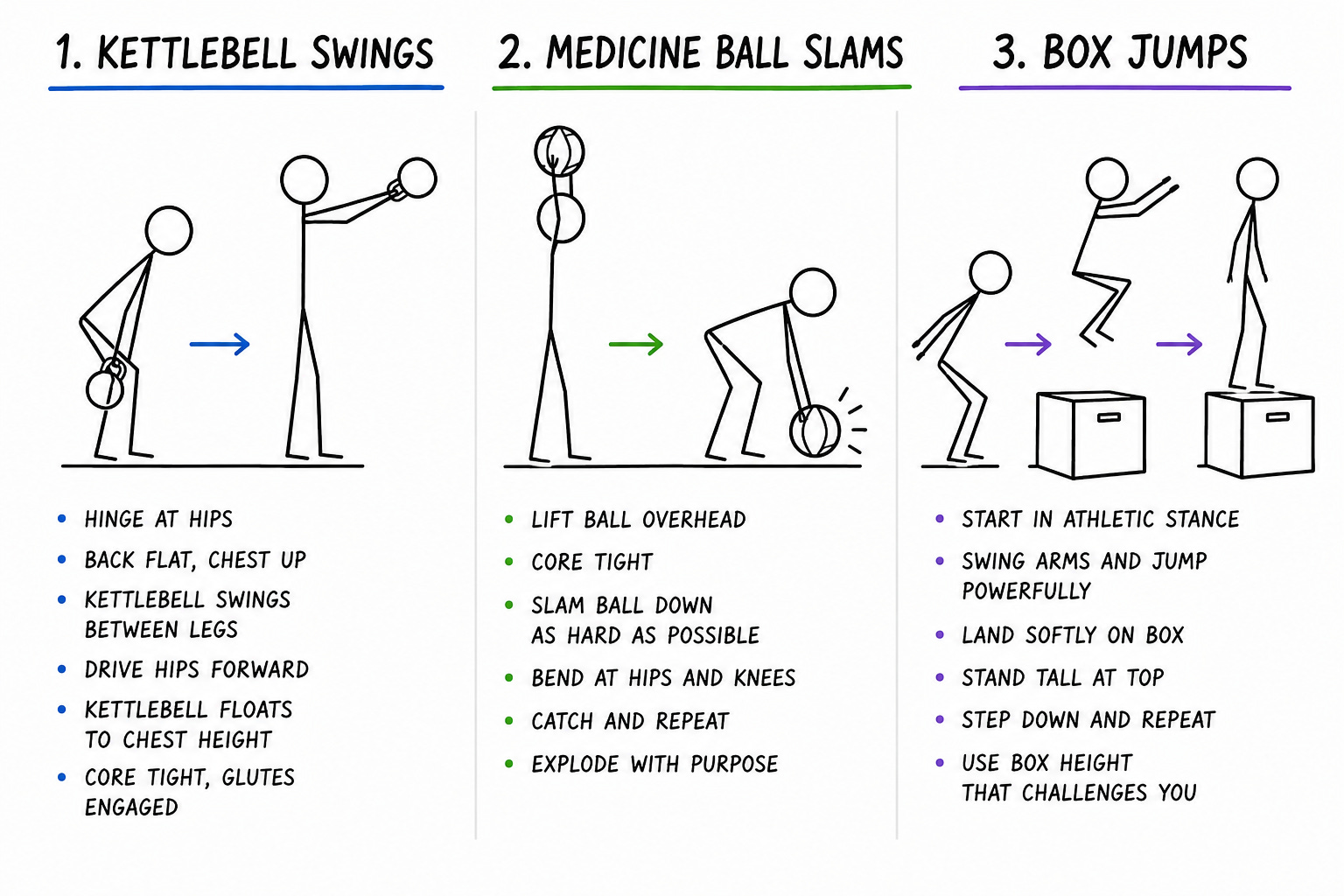
It helps you prevent falls, catch your stumbles, and heavily involves your reflexes, nerves, and antagonistic muscles. Think, medicine ball slams, kettlebell swings, box jumps.
Testing Your Fitness Level
First, why are you testing it? The best reason is that you want to make sure you are on track to age well and stay healthy. It doesn’t matter what John’s fitness level is, only yours.
I’ve provided 3 options for each test. And there are links to websites and apps that help you calculate your results to compare to existing standards.
A. Testing Your Strength
We want to know your 1-Repetition-Maximum, which the cool kids call your 1-Rep-Max.
Option 1: Pick your favorite compound movement like a squat or bench press and keep adding weights until you can only complete a single repetition, with perfect form. Use an online calculator to assess your level.
Option 2: Handgrip dynamometers are cheap and your gym might have one. It’s a great stand-in for your overall strength.
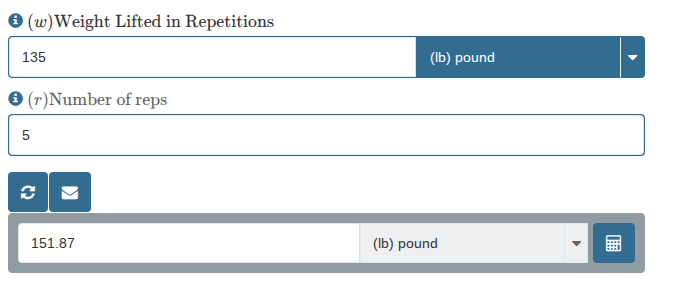
Option 3: If you consider 1 rep max too risky to test, you can do your 5-rep-max (lifting to technical failure by repetition #5) and use the Brzycki equation to calculate your 1-Rep-Max.
B. Testing Your Endurance
We want to know how efficient and effective your body is at using oxygen and how much stamina your muscles have.
Option 1: You can measure your VO2Max directly in a lab or estimate it using your wearable or calculate it using the Bruce Treadmill Test or YMCA Submaximal Cycle Test.
Option 2: The McGill Core Endurance Battery is a great test to measure your muscular endurance. It correlates well with your overall aerobic capacity.
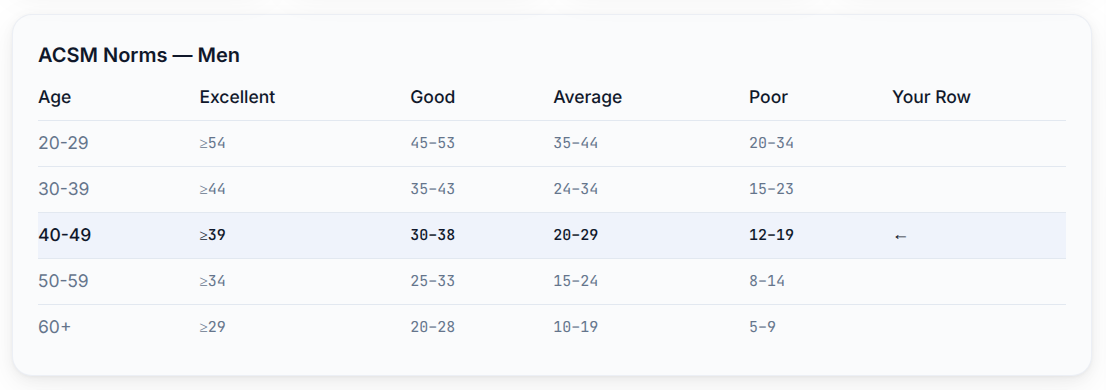
Option 3: The ACSM push-up test measures the max number of continuous, proper-form reps of push-ups you can complete without resting.
Looking to improve your fitness? Book a health coaching session to get started. Join my monthly membership for ongoing health support.
C. Testing Your Power
We want to know how explosively your neuromuscular system can create force in a short amount of time.
Option 1: The Vertical Jump Test is more of a lower body measurement but translates well to the whole body. You can shoot a video of yourself doing it and upload it to a website or use an app.
Option 2: The Medicine Ball Chest Pass is tough! You throw a heavy ball horizontally from chest level and measure how far you can throw it. More upper body, which won’t translate well to lower body.
Option 3: You’ll need an accelerometer (or a phone app) to measure your Bar Speed. It’s how fast you can move a bar with 50-70% weight of your 1-rep-max.
You Don’t Need Perfection
No matter when you’re at right now, the goal is to maintain or make improvements. Chances are you already know if your stamina is lacking or you don’t feel strong.
Numbers can be really helpful for tracking. If you can deadlift 100 lbs but don’t feel strong, aim for 125 lbs over the next 6-12 months. That’s a win.
How to Train Each Category
Having a personal trainer has been a game changer for me. If you can afford a good one, I highly recommend one.
A. Training Your Strength
To train your strength you need to follow the core principle of progressive overload. If you beat batter as a chef by hand, over time you’re going to beat the batter faster and beat more batter. You’ll get some really big forearms.
Add more weight
Complete more repetitions
Improve your execution (form)
2-3 times per week is usually sufficient. Rest 2-3 minutes between sets. The number of sets and reps will depend on your endurance, but 3-4 sets with 5-8 reps is a great start for strength. Keep good form and leave 1-2 reps left in the tank.
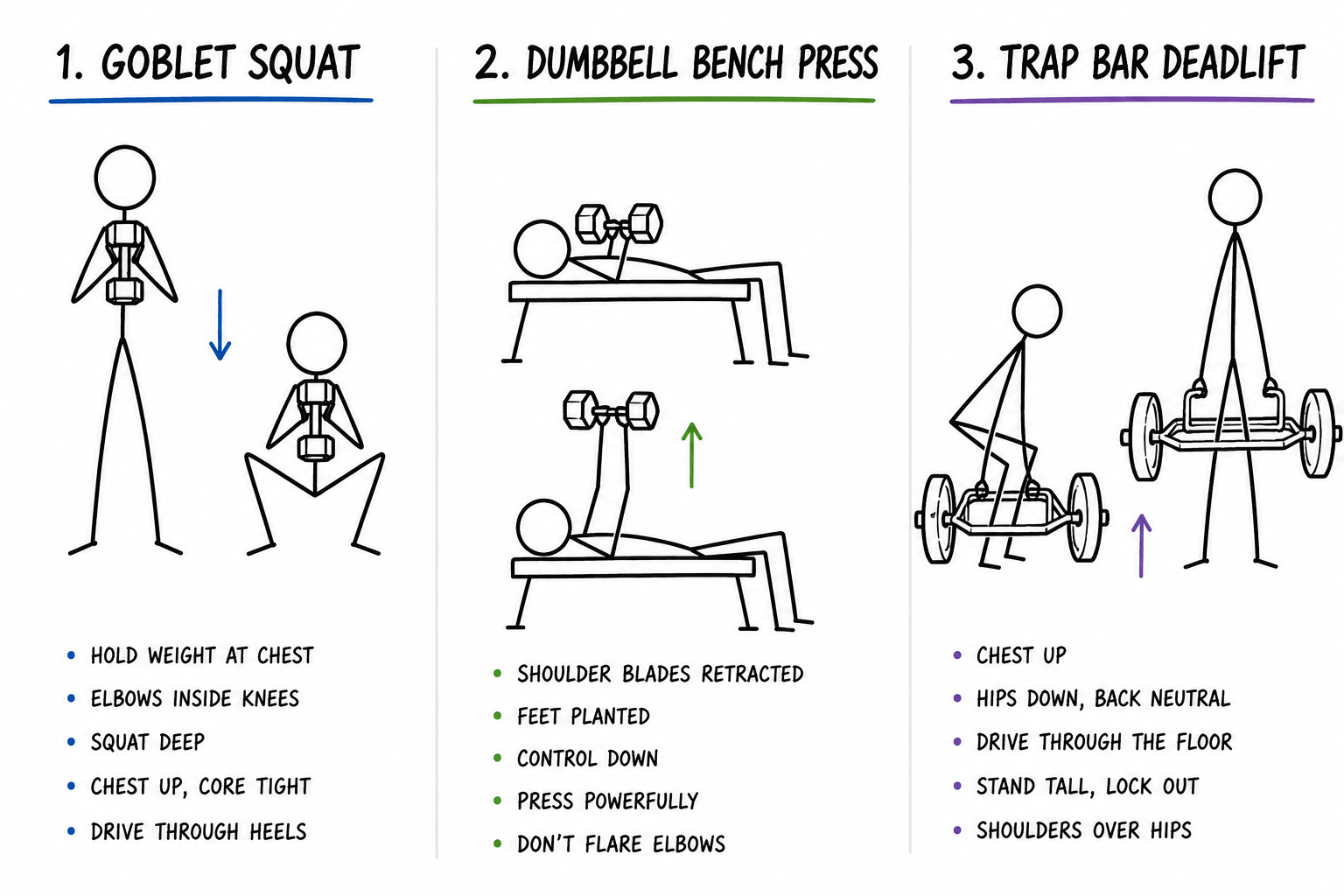
Aim for a squat, chest press, and deadlift. Here are versions we use in my practice:
Goblet Squat: This loads the weight more in the front, keeping the torso upright, reducing stress on the lower back.
Neutral-Grip Dumbbell Bench Press: Great for anyone with shoulder pains or impingement.
Trap Bar Deadlift: Keeps the load centered, minimizing lubar stress but still loading your legs effectively.
B. Training Your Endurance
We are trying to build your aerobic base by increasing mitochondrial density and those tiny capillary networks. The goal is to avoid metabolic fatigue which is hard to recover from.
Aim for 3-4 days per week, easily combined with your strength days. Ideally a continuous session of 30-45 minutes.
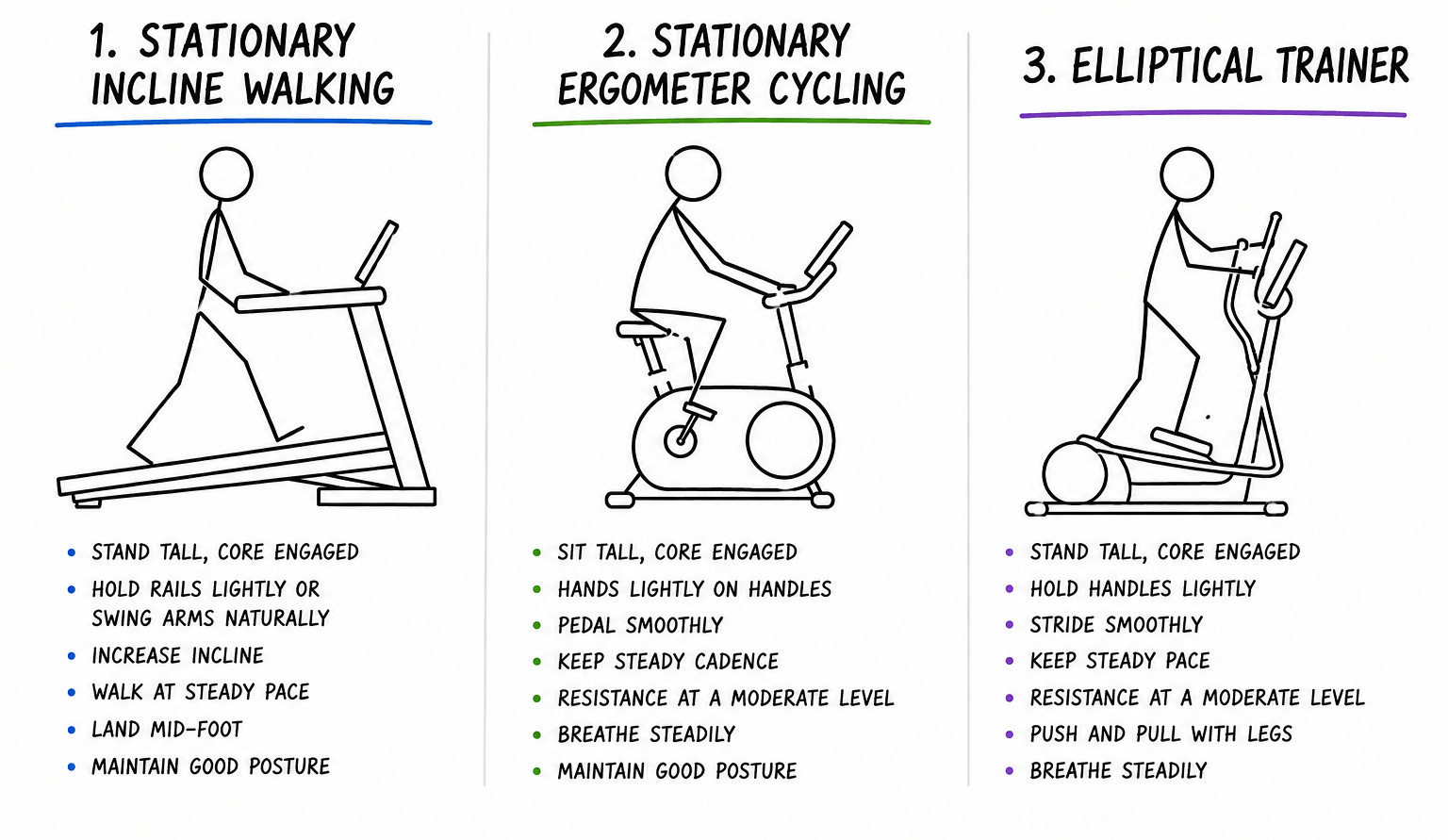
Stationary Incline Walking: Low impact on joints. You can track your Zone 2 HR on your phone or watch or just measure manually.
Stationary Ergometer Cycling: Low-impact and easy on the tush. Switch to regular cycling if you prefer.
Elliptical Trainer: It’s a full-body workout that’s still easy on the knees. Replace with a rower if you prefer.
C. Training Your Power
This is what I’m focusing on right now with my trainer. In rock climbing, you need power to get through complex moves without tiring out. We want quality + speed, not grinding + fatigue.
Aim for 1-2 days a week with a lot of rest between sets.
Kettlebell Swings: Trains explosive hip extension and safe on the back as long as you keep the weight low, focus on form, and speed.
Medicine Ball Slams: Improves upper body power. You can do chest passes instead if the slamming is too loud in your gym.
Box Jumps: Builds that explosiveness in the lower body. You don’t need a tall box. Focus on form and speed.
Disclaimer:
Dr. Mohammad Ashori is a U.S.-trained family medicine physician. The content shared here is for education and general guidance. It is not personal medical advice, diagnosis, or treatment, and it does not create a doctor-patient relationship. Humans are complicated and your personal details matter. Your healthcare team is your best resource before making medical decisions, changing medications, or managing symptoms. This information is to help you add more depth to those conversations.
Follow me on:
📸 Instagram
▶️ YouTube
📘 Facebook
👽Reddit
Dynamite article Dr. Ashori. I’ve been writing a similar themes article but different and I thought I’d share my workout from this AM given your outstanding list, description to add to a real world example. Not saying it is perfect but a real life, lived example while on a trip.
Walk to Juneau, AK club at 6 am. 1 mile.
Round 1. Leg press x 15 reps, 2 45 plates, 12 reps 4 plates, 10 reps 6 plates. Pull-ups, 16, 15, 14 reps. Bird dogs 12 reps eaxh side x3. All exercises follow each other and repeat 3x
Round 2. 35 lb single leg dead lift each side 8 reps, 35 lb dumbbells overhead Arnold press x 10, hanging L sit-ups x3, repeat 3x
Round 3. Horizontal row 10 reps (100,115,130 lbs), Seated Calf raises 165 lbs x 12 reps, 16 alternate side overhead medicine ball throws, repeat 3x
10 minutes mobility.
1 mile walk back to hotel.
45 minutes total strength.