


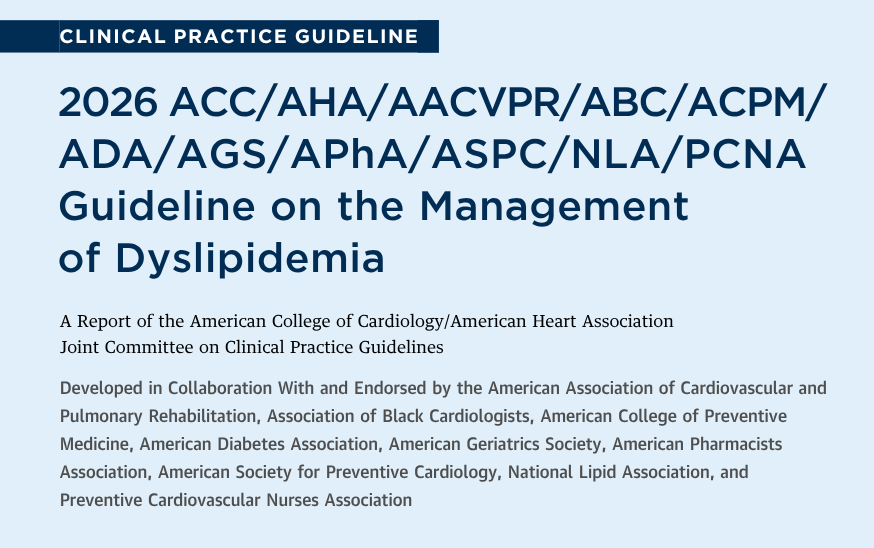
The new American Heart Association/American College of Cardiology 2026 dyslipidemia guideline still treats lifestyle as the foundation of lipid management, even when medications are used.
The guideline emphasizes that lifestyle changes should begin before medication and continue alongside it. However, in practice, it’s rare for lifestyle changes to precede medications.
If you want a lower lifetime risk of heart attacks, stroke, heart failure, and atrial fibrillation, this is what the science says.
1. Dietary Pattern (Most Important Intervention)
The new March 2026 guideline emphasizes overall dietary pattern, not a single nutrients.
Sorry, protein, despite what the marketers and influencers say, having more protein doesn’t seem to make you healthier.
Recommended eating patterns:
Mediterranean diet
DASH-style diet
Plant-forward diet
At its core, the goal is to increase the following items in your food, assuming you have a mostly Westernized (aka, American) diet.
vegetables
fruits
legumes
whole grains
nuts
seeds
fish
unsaturated fats (olive oil)
Most Americans will also need to reduce their intake of:
saturated fat (dairy, meats)
ultraprocessed foods (packaged junk food)
refined carbohydrates (white rice, white flour)
added sugars
processed meats
Saturated fat target
The health conscious American look at chicken or beef and sees protein. They are trying to eat more protein as recommended to them by perhaps well-intentioned health influencers.
But this kind of diet comes at the risk of excess saturated fat.
I know, I know, “Saturated fat doesn’t cause heart disease, it’s sugar!” This is the keto camp argument. And it’s a strong argument. But right now, we’re focusing on the guidelines.
The goal is to keep saturated fats under <7-10% of daily calories, depending on your individual risk.
2. Fiber Intake
The guideline strongly highlights soluble fiber. This is the kind that dissolves in water and becomes gel-like.
Fiber blocks cholesterol absorption and binds bile acids, both lowering overall serum lipids.
Examples include, oats, barley, beans, lentils, fruits, vegetables.
And even though the guideline recommends psyllium husk as a supplement, I highly recommend against it if your goal is better cardiovascular health. Though it does lower your cholesterol.
Recommended target:
25–30 g/day total fiber
5–10 g/day soluble fiber
In my opinion, this is too low. I know this because when I’ve bumped up fiber goals my patients have felt better. But of course there are exceptions.
3. Body Weight Reduction
Weight loss is recommended when BMI or visceral adiposity is high.
This is easily measured with a DEXA scan or bioimpedence or a good old measuring take for a waist to height ratio.
Lowering excess visceral fat reduces triglycerides and increases HDL. It also improves insulin sensitivity.
The guideline emphasizes waist circumference and visceral fat as key cardiometabolic drivers.
Need help with your health? Book a private health coaching session:
4. Physical Activity
The dose of exercise really depends on the individual and their unique risk factor.
The recommended minimum is 150–300 minutes/week moderate activity (aka, zone-2)
or 75–150 minutes/week vigorous activity.
Moderate activity means that my 47-yo self would need to get my heart rate up to 130-ish and maintain it for at least 30 minutes.
The guideline also recommends 2 resistance training sessions/week.
When my patients have high triglycerides, one of the best ways to lower it is to have them do more zone-2 training and resistance training.
5. Alcohol Reduction
Alcohol raises triglycerides and contributes to metabolic dysfunction.
If you have no metabolic problems and at a very low risk of heart disease, reducing your alcohol may not do much for these arenas.
Guideline recommendation:
Limit alcohol as such:
≤1 drink/day women
≤2 drinks/day men
In patient with high triglyerides:
avoid alcohol completely.
Personally, 2 drinks per day is a LOT of alcohol if you’re dealing with any cardiometabolic problems. But, don’t kill the messenger, this is directly from the guidelines.
6. Smoking Cessation
Smoking affects lipid metabolism and vascular biology.
Some of you read this and say, “Come on! Who still smokes?”
Quite a lot of my patients. That’s who.
The benefits are that stopping smoking will increase your HDL, lower inflammation, and reduce plaque buildup.
7. Sleep Health
The guideline newly acknowledges that sleep duration, circadian rhythm, and metabolic syndrome are important factors when it comes to heart disease risk.
Poor sleep is associated with:
higher triglycerides
insulin resistance
weight gain.
The guidelines recommend getting 7–9 hours/night. Of course, that’s total sleep time. If you take an hour to fall asleep and are awake for another 1.5 hours randomly throughout the night, you’ll need a minimum of 9.5 hours in bed to get your 7 of sleep.
Important Guideline Philosophy
The guideline explicitly states that lifestyle is necessary even when medications are used.
The reason I love this is because we’ve seen so many patients who are on medication but are still suffering all the ill consequences of a less-ideal lifestyle.
Medications reduce LDL (and apoB), but lifestyle changes address:
inflammation
insulin resistance
triglycerides
obesity
endothelial dysfunction
All of which contribute to ASCVD risk beyond LDL.
Conflicts of Interest
Well, my main conflict of interest is that I’m trying to sell you my health coaching services to help you fight fatigue, poor sleep, stubborn weight, and your risk of heart disease, cancer, or dementia.
The conflict of interest of the ladies and gents who created this guideline is a bit longer:
Research funding from pharmaceutical companies, institutional research grants for lipid-lowering drug trials, consulting fees from lipid drug manufacturers, advisory board membership for cardiovascular drug development, participation in pharmaceutical scientific advisory committees, speaker honoraria from pharmaceutical educational programs, participation in industry-sponsored continuing medical education programs, lecture fees from drug manufacturers, stock ownership in biotechnology or pharmaceutical companies, equity holdings in cardiovascular diagnostics companies, stock options in pharmaceutical or biotech firms, royalties from medical textbooks or guideline-related publications, intellectual property related to lipid metabolism or cardiovascular therapeutics, patents related to cardiovascular diagnostics or lipid treatment, participation in clinical trial steering committees sponsored by industry, data safety monitoring board membership for pharmaceutical trials, trial investigator roles in industry-sponsored lipid-lowering drug trials, consulting for PCSK9 inhibitor manufacturers, consulting for statin manufacturers, consulting for omega-3 lipid therapy companies, consulting for cardiovascular diagnostics companies, consulting for medical device manufacturers involved in cardiovascular care, advisory board participation for pharmaceutical pipeline development, honoraria for participation in guideline or policy panels funded by medical societies with industry sponsorship, reimbursement for travel to speak at educational conferences sponsored by industry, research collaboration agreements between academic institutions and pharmaceutical companies, grant funding from nonprofit cardiovascular research foundations that receive industry support, board membership in nonprofit cardiovascular research organizations with industry funding, editorial board roles in journals receiving pharmaceutical advertising revenue, leadership roles in professional societies with industry partnerships, consultancy for biomarker testing companies, consultancy for lipid diagnostic laboratory companies, consulting for companies developing cardiovascular risk algorithms, consulting for companies developing lipid-lowering biologic therapies, consulting for companies producing cholesterol-lowering monoclonal antibodies, participation in industry-funded cardiovascular registries, involvement in pharmaceutical sponsored epidemiologic studies, consulting for companies developing RNA-based lipid therapies, consulting for companies developing antisense therapies targeting lipoprotein pathways, consulting for companies developing gene-based lipid treatments, consulting for companies producing cholesterol absorption inhibitors, consulting for companies producing triglyceride-lowering therapies, advisory board participation for companies developing cardiovascular prevention drugs, consulting for companies developing inflammation-targeting cardiovascular therapies, consulting for companies producing cardiovascular imaging technologies used in atherosclerosis research.
I sure hope you’re not getting your medication advice from this guideline. But the lifestyle advice is solid. I vouch for it.
Disclaimer:
Dr. Mohammad Ashori is a U.S.-trained family medicine physician turned health coach. The content shared here is for education and general guidance only. It is not personal medical advice, diagnosis, or treatment, and it does not create a doctor–patient relationship. Humans are complicated and context matters. Always talk with your own healthcare team before making medical decisions, changing medications, or ignoring symptoms. This information is to help you add more depth to those conversations.
Follow me on:
Instagram
YouTube
Facebook
Reddit